  Leading Blog | Posts by Month |
06.30.26

LeadershipNow 140: June 2026 Compilation
See more on   Follow us on Instagram and X for additional leadership and personal development ideas. Follow us on Instagram and X for additional leadership and personal development ideas.
Posted by Michael McKinney at 10:34 AM
06.29.26
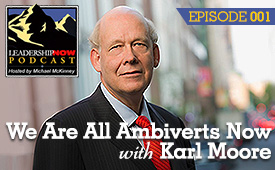
We Are All Ambiverts Now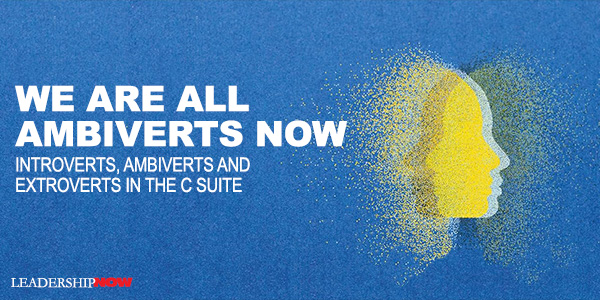
IT is not unusual to label yourself as an extrovert or an introvert—two terms that Carl Jung introduced in 1921. We do have proclivities one way or the other. But there are times when we need to be an extrovert, and there are times when we need to be an introvert. Effective leaders are flexible enough to balance the two extremes as needed. They become ambiverts. Ambiverts are those who can behave like introverts or extroverts depending on the situation they find themselves in. In We Are All Ambiverts Now, authors Karl Moore and Gabriel Mehl state that in today’s world, successful leaders are those who can be both. We live in a world where the loudest voice usually comes out on top. The extrovert’s readiness to engage socially and their “go-getter” approach fits with our preconceived notions of take-charge people. “Extroverts exude confidence and tend to stand out in a crowd. Our world has been constructed for extrovert leadership precisely because they seem competent and reliable at handling crises—they are loud, they are confident, and they let everyone know that they have a plan to fix the issue.” At the same time, extrovert leaders tend to dominate instead of listening and as a result often lack situational awareness. “The extrovert who lacks awareness will not seriously consider the opinions, sentiments, or needs of others. These qualities may harm the group chemistry and energy dynamics that this extrovert worked so hard to establish.” Introverts typically aim, then shoot. “We should not underestimate the power of a quiet-natured individual. Introverts are excellent listeners and thorough analyzers: they are capable of reading the room, considering and incorporating ideas into analysis, and contributing optimally to discussions. They also possess almost impeccable persistence, the capacity for creativity, and the capability to focus.” Extroverts tend to think out loud, whereas introverts process information internally before sharing. This characteristic of introverts can make for more balanced decision-making even if they are prone to overthinking. Neither approach is better than the other. Both approaches have their strengths, so an effective leader will know when to change their approach to best suit the situation. “The opportunity for advantage now lies in flexibility—how quickly and seamlessly leaders can alter their communication style on command and as needed. This opportunity for advantage lies with the ambivert.” Balance is the key. “Whereas introverts maintain a stronger inward life energy, and extroverts maintain the same thing outwards, ambiverts are characterized by their balance and adaptiveness.” Extroverts would be wise to listen more and talk less. Share their ideas much later in the process. Introverts, on the other hand, would be more effective if they stopped ruminating and took the leap. The authors give advice to introverts or extroverts who find themselves managing the other and how to blend a team of introverts and extroverts for the best business results. While the ambiverts’ flexibility and adaptability are a superpower, it puts them at risk of being perceived as inauthentic. Some may find them to be unpredictable. Open communication can help to ease misunderstandings. Consistency with your natural style is important, and not all situations require you to change your approach. Follow us on Instagram and X for additional leadership and personal development ideas.

Posted by Michael McKinney at 09:52 AM
06.26.26
Awareness Can Be Bought. Loyalty Must Be Earned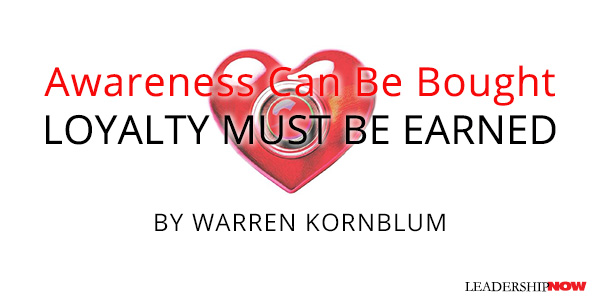
FOR as long as I can remember, marketers have pursued awareness. The assumption was simple: if enough people knew your brand, more would buy from you. Today, while awareness is easier than ever to build, many well-known brands struggle to move beyond being known to being preferred. The gap between awareness and loyalty is relevance. Customers don’t become loyal simply because they know you exist. They become loyal because you matter to them. The logic behind customer awareness used to be straightforward: the more people knew your brand, the more they would buy from you. As marketers, we were taught “share of mind” (think of you), “top of mind” (think of you first), and even “share of wallet” (capture more business than your competitors). For a long time, that approach worked. Today, however, awareness has become easier to achieve and, in itself, far less meaningful. Consumers are exposed to thousands of messages daily. Social media, search engines, influencers, digital advertising, retail media networks, and artificial intelligence have enabled brands of all sizes to reach vast audiences. Today, brands that focus exclusively on visibility often end up competing on price, promotions, and convenience. Brands that focus on meaning and earning trust, however, achieve something far more powerful: an emotional connection. The Difference Between Being Recognized and Being Remembered Being known is no longer enough. Customers may recognize your name, but name recognition alone doesn’t lead them to choose you. It doesn’t create loyalty, generate trust, or build belief. The brands that thrive today understand an important distinction: awareness gets you noticed; relevance gets you chosen. Relevance is what transforms a brand from being simply another option into something that matters to the consumers you’re trying to reach. It’s the difference between being recognized and being remembered. At its core, relevance answers a simple question: “Why should I care?” Many organizations struggle with this question because they focus on what they sell rather than on why it matters. In doing so, they often commoditize their offering rather than differentiate it. Loyalty Arises from Earning “Share of Heart” While both share of mind and share of wallet remain important, increasingly the brands that endure earn something even more valuable: share of heart. It’s the emotional connection that prompts customers to do more than buy from a brand and causes them to believe in it. Share of heart elevates one company over another, even when competitors may be cheaper, faster, or more convenient. At the very least, it levels the playing field. The strongest brands understand what creates loyal customers. They: 1. Lend meaning behind their offerings. Features can be copied. Pricing can be matched. Technological advantages rarely last forever. On the other hand, meaning is much harder to reproduce. When a brand stands for something meaningful, people do more than shop with it. They believe in it. When people believe in a brand, they’re far less likely to abandon it. 2. Provide peace of mind. Customers aren’t merely buying products or services. They’re seeking confidence, belonging, trust, identity, convenience, aspiration, and, importantly, peace of mind. When a brand consistently balances emotional and functional needs, it attracts loyalty in ways that competitors will struggle to disrupt. 3. Understand their deeper purpose. The most relevant brands understand their deeper purpose. They know why they exist. They give customers a reason to care and, very importantly, give employees a reason to believe in that purpose. 4. Reinforce their message through action. Today’s consumers are adept at spotting empty promises. Brands earn trust when their actions consistently align with their messaging. Actions matter far more than words. 5. Foster a sense of belonging. People are naturally drawn to things that reflect their values and aspirations. The best brands make customers feel part of something that goes beyond a transaction. 6. Remain consistent even when it’s difficult. Values are easy to communicate when things are going well. The true test comes when maintaining those values requires difficult decisions. Customers notice in good times and in bad. And they remember. In a marketplace where awareness can be bought, loyalty remains one of the few competitive advantages that must be earned. And the brands that earn it compete on something far more compelling than price, promotions, or noise alone — belief. Final Thoughts: Over The Years I’ve Learned:
 Follow us on Instagram and X for additional leadership and personal development ideas. Follow us on Instagram and X for additional leadership and personal development ideas.
Posted by Michael McKinney at 04:45 PM
06.25.26
Leading Thoughts for June 25, 2026
IDEAS shared have the power to expand perspectives, change thinking, and move lives. Here are two ideas for the curious mind to engage with: Psychiatrist Phil Stutz on bad habits: “The impulses for all of our bad habits travel along the same path – a straight shot to immediate gratification through what I call the lower channel... Lower channel functioning is a disaster. When the pleasure is over, we’re left with nothing. Every time you restrain your impulses, you close off the lower channel... And in this higher channel, the energy accrues. Every act of restraint puts more in the piggy bank.” Source: Lessons for Living: What Only Adversity Can Teach You Nir Eyal on rumination: “Attention doesn’t just observer reality, it shapes it. It amplifies that we focus on while diminishing what we ignore. Rumination (repeatedly focusing on negative thoughts) strengthens neural pathways that keep us stuck. Recognize that your current problems may be partly created by where you’re directing your attention.” Source: Beyond Belief: The Science-Backed Way to Stop Limiting Yourself and Achieve Breakthrough Results Look for these ideas every Thursday on the Leading Blog. Find more ideas on the LeadingThoughts index. Follow us on Instagram and X for additional leadership and personal development ideas.
Posted by Michael McKinney at 03:21 PM
06.19.26
Designing Joyful Workplaces
IN today’s landscape, complete with change, disruption, ambiguity and uncertainty, it’s more important than ever that leaders are effective, not just efficient. Talent management must shift from being reactive to being strategic, intentional and aligned to outcomes. How do we move from “putting out fires” and reading smoke signals to building the “house”, or environment, to better account for potential business impacts? The answer is simple. Business strategies must also become talent strategies. Too often, organizations develop business goals and outcomes first, then call talent leaders in later to operationalize them. The deeper opportunity includes inviting talent leaders into the room during the design phase. This enables organizations to become proactive versus reactive. Across industries, leaders are balancing higher expectations with fewer resources. Employees are navigating uncertainty, financial stress and constant change. The challenge is not simply improving productivity. The challenge is designing workplaces where people feel seen, valued and connected to both their purpose and the organization’s goals. In my book, Joyful Workplaces, I introduce what I call the Joyful Workplace Design, a practical approach for building workplaces where people feel seen, valued, connected to their purpose and aligned to organizational goals. A joyful workplace is “the natural outcome of an effective, high-performing environment.” Some leaders may believe that hosting social activities, happy hours, get-togethers and fun offsites build community, show people they are valued and create connection. And, at the surface level, this is true. These moments can create shared experiences and bring people together. I also encourage leaders to dig deeper and examine the everyday ways they signal to teammates that they are valued and cared for. This may look like sending a short message saying, “I appreciated your work on the presentation today,” or creating opportunities for team members to take on projects and responsibilities that leverage their strengths and interests. It’s important to recognize that every teammate is unique. Ask questions, engage in conversation and be curious. Explicitly ask, “What would make you feel seen, valued and connected?” Based on their response, tailor your leadership to support their needs. Research grounded in Self-Determination Theory reminds us that teammates need autonomy, trust and purposeful work. When leaders delegate a task, they should trust that their teammate is able to carry it out. Mutually agreed upon touchpoints for coaching, support and review may still be needed. But leaders must also create space for teammates to take ownership, contribute their ideas and do their best work. Letting go of excessive control provides teammates with the opportunity to grow, shine and feel that their work matters. Leaders should consider how they balance autonomy and structure. At one end of the spectrum are leaders who may provide a high degree of structure and low degree of autonomy. Examples of this might include frequent check-ins, repeated review cycles and excessive oversight. This may communicate a lack of trust in one’s team members. At the opposite end, some leaders may avoid creating structure because they want team members to be creative and feel trusted. The result of this approach may be lack of clarity around expectations, priorities and accountability. If you want your team members to feel seen, valued and connected, focus on being an effective leader. Leaders can create this clarity through regular one-on-one meetings, documenting action items and owners after meetings, reinforcing priorities and creating opportunities for employees to ask questions and provide feedback. When you consider your favorite bosses and leaders over the years, what do most of them have in common? For me, it’s that they did not know me in a transactional or task-based way. There was not a sense of distance or surface-level knowing. The leaders who impacted me most saw me for me. They intimately knew my strengths, interests and potential. Those were the leaders who enabled me to feel seen, valued and connected. Practically speaking, this means making one-on-one meetings about more than project updates and deliverables. Invite conversations that talk about more than project work or tasks. Over time, you’ll find that relationship building happens beyond the small talk before a meeting or when you see pass someone in the hallway. Another practical step you can take is, when possible, align team members with projects, stretch opportunities and responsibilities that interest them and leverage their unique strengths. Some of the leaders who impacted me most shared writing, speaking and collaboration opportunities because they knew I was interested in them. Others would send me an article, newsletter or idea with a simple note saying, “Thought of you.” Those leaders made me feel seen. So often leaders may feel like they need to do something big, but many small actions over time build a sense of belonging and connection. Avoid over-indexing on team-building exercises, socials and offsites to create connection. Yes. Occasionally they may be welcomed by the team and provide light-hearted interaction. But, over the years, I’ve heard countless stories of team members wishing they were back at their office doing work instead of doing forced team building. While often well intentioned, these efforts can feel surface level when they are not supported by deeper relationship building. How do you sustain a sense of belonging? Build and deepen trust with your teammates over time. Engage in regular conversations including meaningful check-ins and relationship building. Show them that you value their strengths, perspectives and contributions. Create space for others to share ideas and feel heard. During a meeting, ask, “What do you think about this?” “How could we improve in this area?” “Do you have any feedback?” Learn what motivates each member of your team and where they hope to grow. Joyful workplaces are not built through slogans, perks or one-time initiatives. They are shaped through intentional leadership, thoughtful workplace design and everyday interactions that reinforce trust, clarity, accountability and belonging. In many ways, the little things become the big things. Follow us on Instagram and X for additional leadership and personal development ideas.
Posted by Michael McKinney at 04:30 PM
Executive Blind Spots: The Hidden Risk Undermining High-Performing Leaders
RESEARCH shows that nearly 95% of employees do not fully understand their organization’s strategy, and even more concerning, many leaders overestimate how clearly they are communicating it. This disconnect is not just an operational issue—it is a leadership risk, often driven by blind spots at the executive level. High-performing leaders are often celebrated for their decisiveness, resilience, and ability to deliver results under pressure. They rise quickly, earn trust, and are entrusted with increasingly complex responsibilities. Yet the very traits that fuel their success can also obscure a critical vulnerability: blind spots. Executive blind spots are not simply weaknesses or skill gaps. They are the unseen patterns, biases, and behaviors that leaders cannot readily identify in themselves, but that others experience regularly. Left unaddressed, these blind spots quietly erode trust, distort decision-making, and create misalignment across teams and organizations. In many cases, organizations do not fail because of a lack of intelligence or capability at the top. They fail because leaders are unaware of how their behaviors are impacting the people responsible for executing their strategy. The Paradox of High Performance The higher leaders rise, the less likely they are to receive unfiltered feedback. Success creates distance. Titles create insulation. And over time, leaders can become surrounded by individuals who are reluctant to challenge their thinking or question their decisions. This dynamic creates a dangerous paradox: the more successful a leader becomes, the less visibility they often have into their own limitations. High-performing executives are particularly susceptible to this because they have a proven track record. Their confidence is justified. Their instincts are often correct. But when confidence evolves into certainty, and certainty evolves into rigidity, blind spots begin to form. These blind spots are rarely dramatic. They show up subtly: in how leaders communicate, how they respond under pressure, how they interpret dissent, and how they prioritize outcomes over people. Over time, these patterns compound. The Cost of Unseen Behavior Blind spots are costly because they operate below the surface. Leaders may believe they are communicating clearly, while their teams experience confusion. They may believe they are empowering others, while their teams feel micromanaged. They may believe they are decisive, while others perceive them as dismissive. The gap between intent and impact is where organizational risk lives. When this gap widens, several consequences emerge:
These outcomes are rarely attributed to blind spots directly. Instead, they are labeled as culture issues, communication breakdowns, or performance challenges. But at their core, they are leadership awareness issues. Why Awareness Is Difficult to Achieve Self-awareness is often positioned as a personal development goal, but at the executive level, it is a strategic requirement. The challenge is that awareness does not originate internally. Leaders cannot see what they cannot see. Blind spots, by definition, exist outside of conscious recognition. Executives who rely solely on self-reflection to assess their effectiveness will miss critical insights. Without external input, leaders often reinforce their existing beliefs rather than challenge them. Additionally, organizational dynamics can discourage honest feedback. Employees may fear repercussions, damaging relationships, or being perceived as difficult. Even well-intentioned feedback systems can fail if leaders are not prepared to receive and act on input constructively. As a result, many leaders operate with incomplete data about their own leadership. Emotional Intelligence as a Strategic Capability Addressing blind spots requires more than feedback—it requires emotional intelligence. Emotional intelligence enables leaders to recognize how their emotions influence their behavior, how their behavior impacts others, and how to adjust in real time. It is the foundation for effective communication, sound decision-making, and strong relationships. Leaders with high emotional intelligence do not assume they are right. They remain curious. They ask questions. They listen for understanding rather than validation. They create space for dissent and view feedback as a resource rather than a threat. This does not diminish authority. It strengthens it. In high-pressure environments, emotionally intelligent leaders are more likely to remain composed, process information accurately, and respond thoughtfully rather than react impulsively. This stability builds confidence across the organization. Building Accountability into Leadership Awareness without accountability does not produce change. Leaders must move beyond identifying blind spots to actively addressing them. This requires intentional systems. Effective leaders build accountability relationships: trusted peers, mentors, or advisors who are empowered to provide candid feedback. These relationships must be structured, consistent, and grounded in mutual respect. Leaders should also establish mechanisms within their organizations that encourage upward feedback. This includes creating psychological safety, modeling openness to feedback, and demonstrating that input leads to action. When leaders respond defensively or dismissively, feedback stops. When they respond with curiosity and follow-through, feedback becomes a continuous source of insight. Aligning Behavior with Values At the core of addressing blind spots is alignment. Leaders often articulate strong values—integrity, respect, accountability—but their behaviors under pressure may not consistently reflect those values. This misalignment creates confusion and undermines credibility. High-performing leaders must regularly assess whether their actions align with their stated principles. This requires discipline, reflection, and a willingness to make adjustments. Consistency is critical. Teams do not evaluate leaders based on isolated moments. They evaluate them based on patterns. When leaders consistently align their behavior with their values, they establish credibility. When they do not, trust erodes quickly. Creating a Culture That Reduces Blind Spots Executive blind spots are not only an individual issue, but they are also an organizational one. Leaders set the tone for how feedback is given, received, and acted upon. When leaders prioritize awareness and accountability, they create cultures where continuous improvement is expected. Organizations that effectively address blind spots share several characteristics:
These environments do not eliminate blind spots entirely, but they reduce their impact by bringing them into the open. Moving From Awareness to Impact The most effective leaders are not those who are without flaws. They are those who are aware of them and committed to continuous improvement. Executive blind spots will always exist. The goal is not perfection—it is visibility and responsiveness. Leaders who actively seek feedback, develop emotional intelligence, and align their behavior with their values are better equipped to navigate complexity, build trust, and sustain performance. In contrast, leaders who ignore or minimize their blind spots risk undermining the very success they have worked to achieve. High performance is not just about what leaders accomplish. It is about how they lead others to accomplish it. The leaders who sustain impact are not the ones who see everything clearly—they are the ones who are willing to confront what they cannot see. Follow us on Instagram and X for additional leadership and personal development ideas.
Posted by Michael McKinney at 04:28 PM
06.18.26
Leading Thoughts for June 18, 2026
IDEAS shared have the power to expand perspectives, change thinking, and move lives. Here are two ideas for the curious mind to engage with: Nvidia CEO Jensen Huang on success: “‘People with very high expectations have very low resilience. Unfortunately, resilience matters in success,’ he later said. ‘Greatness is not intelligence. Greatness comes from character.’ And character, in his view, can only be the result of overcoming setbacks and adversity. To Jensen, the struggle to persevere in the face of bad, and often over-whelming, odds is simply what work is. It is why, whenever someone asks him for advice on how to achieve success, his answer has been consistent over the years: ‘I wish upon you ample doses of pain and suffering.’” Source: The Nvidia Way: Jensen Huang and the Making of a Tech Giant by Tae Kim Brad Stulberg on rugged flexibility: “The goal is not to be stable and therefore never change. Nor is the goal to sacrifice all sense of stability, passively surrendering yourself to the whims of life. Rather, the goal is to marry these qualities to cultivate what I call rugged flexibility. To be rugged is to be tough, determined, and durable. To be flexible is to consciously respond to altered circumstances or conditions, to adapt and bend easily without breaking. Put those together and the result is a gritty endurance, an anti-fragility that not only withstands change, but thrives in its midst.” Source: Master of Change: How to Excel When Everything Is Changing – Including You Look for these ideas every Thursday on the Leading Blog. Find more ideas on the LeadingThoughts index. Follow us on Instagram and X for additional leadership and personal development ideas.
Posted by Michael McKinney at 09:12 AM
06.11.26
Leading Thoughts for June 11, 2026
IDEAS shared have the power to expand perspectives, change thinking, and move lives. Here are two ideas for the curious mind to engage with: Sebastian Wernicke on automating insight: “Machine learning is not equally suitable for all tasks. It performs best when applied to frequent, repetitive decisions or tasks of manageable complexity. At the same time, the limits of machine learning when it comes to tacit understanding ensure that humans will be anything but redundant for the foreseeable future. For any situation requiring careful, nuanced consideration, developing and deploying a useful algorithm often costs more time and effort than it saves. And even when an algorithm eventually performs an operational activity, humans must still plan and manage it, requiring organizations to cultivate the necessary skills to guide the models and set appropriate guardrails.” Source: Data Inspired: Building an Organizational Culture of Inquiry for Lasting Transformation Mike Grossman on scope creep: “No matter how excited and optimistic you are about the business, putting all your eggs in one basket is unsettling. As a result, it’s very tempting to look for ways to diversify. The result is scope creep. It’s also easy to be fooled into thinking that opportunities adjacent to your primary area of focus are natural extensions of your strategy. But that usually isn’t the case. It may seem counterintuitive, but less really is more. If you want to build a great business, it’s crucial to resist the temptation to spread yourself and the company too thin. Excellence demands focus.” Source: Failure Is An Option: Reflections of a Silicon Valley CEO Look for these ideas every Thursday on the Leading Blog. Find more ideas on the LeadingThoughts index. Follow us on Instagram and X for additional leadership and personal development ideas.
Posted by Michael McKinney at 07:34 AM
06.09.26
Your Company Doesn’t Just Need a Defensible Strategy – It Needs One that Can Adapt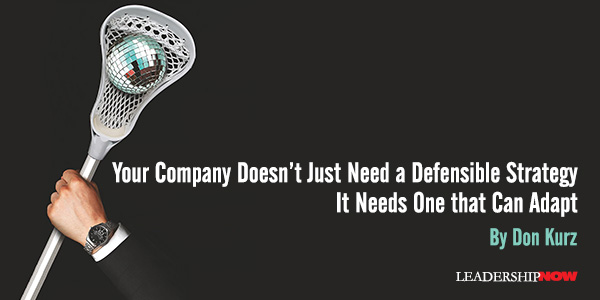
IT'S a well-worn saying that the only constant in life is change, and that’s doubly true of the business world. If you’re successful, you need to constantly check your rearview mirror because there are always competitors right behind you. Earlier in my career, I became CEO of a company, Equity Marketing (which became EMAK Worldwide). My thinking at the time was: “Okay, you’re the boss, so you need to come up with all the important strategic and visionary ideas because that’s what your job is and that’s what you’re expected to do.” But I ultimately concluded that’s actually not the job. The job as CEO is to make sure the company has a unique, compelling, and defensible advantage — whether you develop that strategy by yourself, or you curate it from your team. Defensible in this context means that a competitor can’t easily remove you from your perch in the marketplace because you have a unique process, or unique technology, or unique talent with a unique culture, or unique client relationships. Whatever it is, you own something that makes it hard for a competitor to dislodge you from your position. The ultimate hallmark of a defensible strategy is that it’s adaptable to the inevitability of change. So, if nepotism is your strategy and you got into Yale or Harvard despite your mediocre high school GPA because you’re a legacy, that’s not going to be sustainable when you get out into the world and your circumstances change. When you graduate from a college you never should have gotten into, all of a sudden you’ll find yourself competing with smarter and more talented people for jobs that they deserve more than you do — and you’ll be out of luck. Defensible advantages are more fleeting these days than they used to be because technology levels the playing field. And the pace of disruption is also much faster than it used to be. Take advertising and marketing, for example: because of AI and other factors, our industry is undergoing a lot of change and consolidation. Why does the world need our advertising and marketing company (Omelet LLC)? For us, that’s the ultimate question. It’s a hard question to answer, but our survival ultimately depends on our ability to answer it. The best our service business can do to stay ahead of the curve is to truly understand our defensible advantages and capitalize on them. Here are some keys to making sure our company has a defensible strategy: 1. Hire uniquely strong people. I’m a reasonably smart guy, but my biggest strength is recruiting good people, letting them have a real say, and then creating an environment to let the magic happen. Our competitive advantage when we hire good people is doing incredible work every time and providing impeccable client service. 2. Tap the team’s strategic ideas. The best thing about devising a defensible strategy for your business is that you don’t have to do it all by yourself. If the people on your management team come from different backgrounds and have different perspectives and different kinds of expertise, you can curate the best of everyone’s ideas and then formulate your strategy from their input — getting their ideas and then blending them with your own. It’s useful to have as many different perspectives as possible, because there are many things you might not know. In this way, not only are you developing a more robust strategy, but you’ll find it’s far easier to execute the plan when your people have had a say in developing it. 3. Define the business by the solutions we provide. Because disruption is inevitable, don’t define your business by your product or process. A defensible strategy is never defined by a simple product or service — it has to be something that evolves with the marketplace. And if there’s a better way to provide that solution, you should be indifferent to how you provide it. Some say that horse-and-buggy drivers should have been the inventors of the automobile because they were in the transportation business. I think that’s a bit of a stretch, but the underlying point is valid: you aren’t in the horse-and-buggy business; you’re in the business of getting from point A to point B. When automobiles began to emerge on the scene, the buggy manufacturers should have actively explored building cars. 4. Deliver on a strong work ethic. As I previously noted, I believe I’m a reasonably smart guy, but I’m definitely not smarter than everyone else around me. I don’t have to be smarter than everyone else, however, because there’s a more reliable way to make up for smarts — and that’s honest, hard work. Don’t get me wrong — I’m not saying that natural gifts like intelligence and athleticism don’t matter, or that they don’t provide a strong advantage. But an advantage can be squandered if you don’t have the grit to do the hard work of maximizing it. Companies can have a variety of defensible advantages — a premium brand, a low-cost operating model, access to low-cost capital, or a network effect like social media titan Meta. The key to winning in the long run is to curate a good strategy, execute it flawlessly, bend with the times, and stay true to your brand identity. Follow us on Instagram and X for additional leadership and personal development ideas.
Posted by Michael McKinney at 09:36 AM
06.05.26
Are You A “Good” Leader? That Might Be the Problem
WHEN I speak to a room of leaders, I like to start with a quick show of hands. How many would say they’re a bad leader? No hands. Good. How many think they’re exceptional, one of the best to ever do it? A few brave souls, usually with a laugh. And how many would put themselves somewhere in the middle, pretty good to very good? That’s where most hands go up. And honestly, that’s where mine goes up too. When Good Stops Being Enough Here’s the catch. That “pretty good” is exactly where the trouble usually starts right now. For most of our careers, good was plenty. Show up prepared, communicate clearly enough, hit your numbers, and treat people fairly. Success. In a stable world that adds up to a solid leader and a steady team. But we’re not leading in a stable world anymore. Economic whiplash, AI anxiety, restructuring, burnout, or the news alert that makes a 23-year-old wonder if their job will exist in two years. Uncertainty is the operating environment now. And uncertainty changes the math. My team and The Harris Poll surveyed more than 2,000 employees about their leaders, and the finding that stuck with me is now on a sticky note on my desk: uncertainty multiplied by good leadership doesn’t produce good outcomes. It produces a slow rise in anxiety, a creeping complacency and a quiet drift. Not a collapse. Nobody calls a meeting about it. It’s the erosion you don’t notice until trust has already thinned. What I Learned in a Parking Lot I learned this the hard way, and not in a boardroom. Late last year I taught my daughter Avi to drive. Picture an empty parking lot. No traffic, no danger, just the two of us and a lot of nerves. She started out confidently. I was the problem. Every time she took a turn a little fast, I grabbed the door handle. Every sharp breath I took, she paused. My white knuckles weren’t keeping her safe; they were teaching her to freeze. She went from learning to surviving, in an empty lot, with the one person who most wanted her to succeed sitting right beside her. It hit me halfway through that lesson: I do this to my team. Not on purpose. I care about them, same as I care about Avi. But when I lead from my own anxiety, it travels. People feel it, they tighten up, and the very capability I need from them shrinks. That’s what good leaders tend to miss. The Mirror So, here’s the mirror I’d hold up. Three questions, and they’re harder than they look.
None of those gaps show up in a quarterly engagement score until it’s too late. That’s what makes these gaps so easy to miss. The Leaders No One Worries About I want to be direct about something, because it’s easy to soften. If you’re a competent, well-meaning, dependable leader, you’re exactly the person this is written for. The leaders I worry about most aren’t the ones who are obviously struggling. It’s the good ones, precisely because no one thinks to worry about them, including themselves.The Heart Work Can Be Taught The good news is that the distance between good and exceptional isn’t a talent gap but a training gap. These skills are learnable. Today, they’re the heart work of leadership, and not one of them requires charisma or a preference for extraversion. Ingraining new habits is about starting small. In this case, start with gratitude, which our research found is the single biggest differentiator between good and exceptional leaders. Retire “great job, team.” Try “I noticed what you did in that meeting, and it mattered.” Name the behavior, name the impact, and make it personal. Then go further. Have one conversation this week that isn’t about tasks. Ask someone where they want to grow, and how what you’re building together connects to that. Then actually listen to the answer. I’ve come to believe the leader makes the weather. In a parking lot or a team meeting, the same rule holds. Create a climate of tension and watch people hunker down. Offer calm and watch them start to drive. Good used to be good enough; it isn’t anymore. The difference isn’t the storm, it’s who’s steering the ship. Follow us on Instagram and X for additional leadership and personal development ideas.
Posted by Michael McKinney at 10:51 AM
06.04.26
Leading Thoughts for June 4, 2026
IDEAS shared have the power to expand perspectives, change thinking, and move lives. Here are two ideas for the curious mind to engage with: Jim Collins on the love of doing the work: “There is a big difference between being in love with the idea of one’s work and being in love with doing the work itself. It means not just the love in the 0.001% highlight moments; it means love in the other 99.999%.” Source: What to Make of a Life: Cliffs, Fog, Fire and the Self-Knowledge Imperative Morgan Housel on the pain of pursuit: “Most things worth pursuing charge their fee in the form of stress, uncertainty, dealing with quirky people, bureaucracy, other peoples’ conflicting incentives, hassle, nonsense, long hours, and constant doubt. That’s the overhead cost of getting ahead.” Source: Same as Ever: A Guide to What Never Changes Look for these ideas every Thursday on the Leading Blog. Find more ideas on the LeadingThoughts index. Follow us on Instagram and X for additional leadership and personal development ideas.
Posted by Michael McKinney at 12:22 PM
06.01.26
First Look: Leadership Books for June 2026
HERE'S A LOOK at some of the best leadership books to be released in June 2026 curated just for you. Be sure to check out the other great titles being offered this month.
Ninety-nine percent of businesses surveyed say that data and AI are a top priority―but two-thirds admit to feeling stuck. What most leaders miss is that to succeed at becoming a data-driven business requires developing a nuanced understanding of why data holds such transformative power, what a data-inspired culture looks like, and how to get there. Data Inspired shows that the secret isn't to be more data-driven―it is to become data-inspired. This book reveals the crucial strategic distinction between using data to optimize existing operations and using them as a catalyst for deep transformation and innovation.
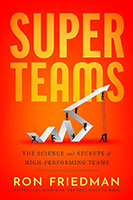
What do the best teams do differently? To find out, award-winning social psychologist Ron Friedman surveyed thousands of teams and pinpointed the precise habits that separate the best from the rest. The results upend everything we think we know about teamwork. It turns out that the most successful teams aren't the ones that collaborate most, get along best, or put in the longest hours. What really sets them apart is the way they manage their energy and attention, bring out the best in one another, and keep improving over time. Blending eye-opening discoveries with unforgettable stories, Superteams takes you inside the writers' room of Succession and Bridgerton, the recording studio of ABBA and Fleetwood Mac, the kitchens of Michelin-starred restaurants, the laboratories of Nobel Prize–winning scientists, the locker rooms of NBA and NFL teams, and the boardrooms of the world's most innovative companies.
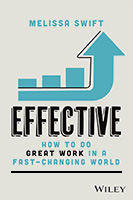
Navigate the weird, chaotic world of modern work, no matter your position. While there's no shortage of advice on being amazing or avoiding burnout, what if you simply want to get things done in a workplace that feels increasingly impossible? Effective is here to help you get your job done well without losing your mind. Drawing from up-to-date research and provocative interviews with employees across industries and levels, renowned people consultant Melissa Swift offers a positive, well-illuminated path through the dark forest of destabilizing workplace changes.
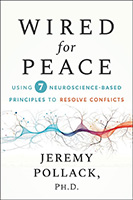
A deep dive and exploration into the critical role of the nervous system in conflict resolution and peacebuilding. Drawing from neuroscience, social neuropsychology, predictive-processing theory, and decades of applied conflict resolution practice, Wired for Peace presents a transformational model for understanding why conflict escalates and how sustainable peace is created. Moving beyond traditional communication-skills or mediation-only approaches, this book shows that lasting conflict resolution begins with the autonomic nervous system and the brain’s threat-prediction mechanisms. The book illuminates the internal neural architecture that determines how individuals perceive danger, construct narratives, react to stress, and attempt either protection or connection.
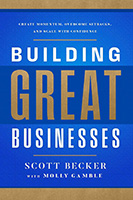
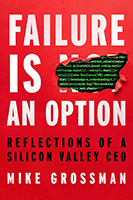
For nearly three decades, Mike Grossman has been at the center of the world’s most mythologized innovation hub, leading early-stage, venture-funded tech companies through the highs, heartbreaks, and near misses that define life in the Valley. He has raised millions, managed boardroom crises, built great teams, and navigated moments when everything seemed one bad quarter away from collapse. Failure Is An Option gathers forty-four sharp, candid essays shaped by years in the trenches. Together, they form a mosaic of what leadership really looks like when the cameras aren’t rolling: the moments of absurdity, fear, luck, and endurance that make or break a company and the person leading it. Unflinchingly honest and darkly funny, Grossman dismantles the myths of startup success and offers an insider’s view of what it means to build under pressure. This is not a playbook or a victory lap. It is a collection of truths about ambition, uncertainty, and the art of holding it together long enough for the story to make sense.
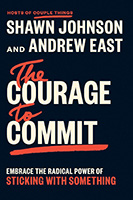 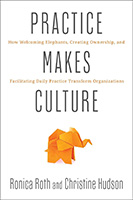 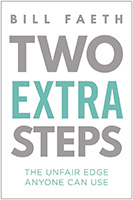 
“Books are the quietest and most constant of friends; they are the most accessible and wisest of counselors, and the most patient of teachers.” — Charles W. Eliot
Follow us on Instagram and X for additional leadership and personal development ideas.
Posted by Michael McKinney at 11:56 AM
|
 |
BUILD YOUR KNOWLEDGE


How to Do Your Start-Up Right STRAIGHT TALK FOR START-UPS 

Grow Your Leadership Skills NEW AND UPCOMING LEADERSHIP BOOKS 
Leadership Minute BITE-SIZE CONCEPTS YOU CAN CHEW ON 
Classic Leadership Books BOOKS TO READ BEFORE YOU LEAD |
|
ABOUT
FOLLOW US:
     

Recent Posts
Categories
Full site feed
MONTHLY ARCHIVE
|
 |
| ||
 | Follow us on:
© 2024 LeadershipNow™  |
| |
 Here is a selection of











 Data Inspired
 Superteams
 Effective
 Wired for Peace
 Failure Is An Option