  Leading Blog | Posts by Month |
05.31.26

LeadershipNow 140: May 2026 Compilation
See more on   Follow us on Instagram and X for additional leadership and personal development ideas. Follow us on Instagram and X for additional leadership and personal development ideas.
Posted by Michael McKinney at 11:53 AM
05.28.26
Leading Thoughts for May 28, 2026
IDEAS shared have the power to expand perspectives, change thinking, and move lives. Here are two ideas for the curious mind to engage with: Psychiatrist Thomas Szasz on what is required to learn: “Every act of conscious learning requires the willingness to suffer an injury to one’s self-esteem. That is why young children, before they are aware of their own self-importance, learn so easily; and why older persons, especially if vain or important, cannot learn at all.” Source: Words to the Wise: A Medical-Philosophical Dictionary Simone Stolzoff on not knowing: “When we experience uncertainty, it activates two parts of our brain simultaneously: the amygdala, which is responsible for alerting the brain to potential threats, and the prefrontal cortex, which is responsible for analytical and deliberate thinking. The amygdala signals the body to release stress hormones, while the prefrontal cortex analyzes the situation to plan for a logical response. If the situation is particularly high stakes (for example, a looming layoff at work) or if you have a particularly low tolerance for uncertainty, it’s easy for the amygdala to hijack your brain’s response, prompting you to enter a fight, flight, or freeze mindset-whether or not there is actually a threat to your survival. Dr. Anne-Laure Le Cunff, a neuroscientist who helps leaders navigate uncertainty, says, ‘Uncertainty tolerance allows us to explore different options, rather than rushing to whatever is most reassuring.’” Source: How to Not Know: The Value of Uncertainty in a World that Demands Answers Look for these ideas every Thursday on the Leading Blog. Find more ideas on the LeadingThoughts index. Follow us on Instagram and X for additional leadership and personal development ideas.
Posted by Michael McKinney at 10:24 AM
05.22.26
Why Intelligent Leaders Still Make Bad Decisions
AT first glance, leadership mistakes are difficult to explain. Many failed decisions are made by highly intelligent, experienced, and capable people. The leaders involved often possess strong analytical skills, deep industry knowledge, and years of practical experience. They are not careless. They are not uninformed. And yet, serious mistakes still happen: A company commits to the wrong strategy despite clear warning signs. A leadership team continues investing in a failing initiative long after the evidence turns negative. An executive becomes increasingly confident precisely when caution is most needed. From the outside, these failures often appear irrational. But internally, they rarely feel that way. That is what makes them dangerous. Most flawed leadership decisions do not feel obviously wrong when they are made. They feel reasonable. Logical. Sometimes even unavoidable. The problem is rarely intelligence itself. The problem is the thinking structure behind the decision. In strategic environments, strong decision-makers eventually learn an uncomfortable truth: expertise does not eliminate cognitive distortions. In some cases, it amplifies them. Experience improves pattern recognition, speed, and confidence. But it can also create hidden rigidity. The more successful people become within a particular model of reality, the less likely they are to question the assumptions behind that model. This creates a subtle trap. Leaders become highly effective at solving problems inside the framework they already understand, while becoming less willing to question whether the framework itself still fits reality. Intelligent people are often exceptionally good at defending conclusions that feel internally consistent. Once the underlying assumptions become flawed, intelligence can make the problem worse rather than better. The danger is not bad reasoning. The danger is good reasoning built on unexamined assumptions. The Expertise Trap Experience is one of the most valuable assets a leader can possess.
In stable environments, this creates a major advantage. The problem is that expertise is built from past patterns. It relies on accumulated models of how the world works. Most of the time, those models are useful. But when conditions change, the same expertise that once improved judgment can begin to distort it. Leaders start interpreting new situations through outdated assumptions. Signals that contradict the existing model are dismissed as temporary noise. Evidence is filtered selectively. Familiar explanations are favored over uncomfortable alternatives. This happens because expertise creates efficiency. Experienced leaders do not evaluate every situation from first principles. They rely on mental shortcuts developed through repetition and prior success. That is normally rational. Without those shortcuts, decision-making would become impossibly slow. But shortcuts introduce vulnerability. The more often a particular model has worked in the past, the harder it becomes to recognize when it no longer applies. This creates one of the most dangerous dynamics in leadership: Success increases confidence in the model precisely when the model may need to be questioned most. In strategic games, strong players sometimes lose not because they misunderstand the position, but because they interpret it through patterns from previous games that no longer fit the current reality. Leadership works the same way. Past success can quietly reduce curiosity. And once curiosity declines, assumptions stop being tested. That is where intelligent leadership mistakes often begin. One of the clearest examples of this dynamic can be seen in elite sports leadership. For years, José Mourinho achieved extraordinary success using a highly disciplined and defensively structured approach to football management. He won league titles across multiple countries and captured Champions League titles with teams that were not considered tournament favorites. The success was so consistent for so long that belief in the model became almost unshakable. And that is understandable. When a framework repeatedly produces elite outcomes, questioning it begins to feel irrational. The model has earned trust through years of validation. But environments change. Opponents adapt. Cultures evolve. New strategic approaches emerge. What once created an advantage may gradually become a limitation. One of the most difficult challenges for highly successful leaders is recognizing when the methods that created success are no longer producing the same edge, not because the original model was flawed, but because every model has conditions under which it works best. The danger is that prolonged success can quietly reduce the willingness to re-examine those conditions. At that point, confidence in the model becomes stronger than sensitivity to new evidence. Once that happens, adaptation slows down precisely when it becomes most necessary. Organizations Reinforce Assumptions Leadership decisions are rarely made in isolation. Even highly independent leaders operate inside systems shaped by culture, incentives, hierarchy, and group dynamics. Over time, these systems begin reinforcing certain assumptions automatically. This creates another hidden risk. Once an organization collectively accepts a particular interpretation of reality, that interpretation becomes increasingly difficult to question, not necessarily because people are afraid to disagree, but because the underlying assumptions gradually stop being visible. They become embedded in the language of meetings, strategic priorities, performance metrics, and internal narratives. What once began as a hypothesis slowly evolves into something treated as self-evident. At that point, organizations stop testing assumptions and start defending them. This is especially dangerous during periods of success. Strong performance creates psychological validation. Growth, profits, or market dominance make the existing model appear unquestionably correct. As long as results remain positive, few people feel pressure to challenge the structure behind them. However, success can conceal structural weaknesses for surprisingly long periods of time. A flawed strategy may continue producing acceptable results simply because market conditions remain favorable. A leadership model may appear effective because past momentum continues carrying the organization forward. The danger emerges when the environment changes. Organizations that built their identity around a particular way of thinking often struggle to adapt because adaptation requires more than operational change. It requires cognitive change. And cognitive change is uncomfortable. It forces leaders to reconsider assumptions that may have defined years of previous success. In many organizations, the cost of questioning the model quietly becomes higher than the cost of defending it. That is when intelligent organizations begin making predictable mistakes, not because nobody sees the problem, but because the system itself discourages seeing it clearly. The strongest leadership cultures are not the ones that eliminate disagreement. They are the ones that make constructive doubt acceptable before reality forces the issue externally. The Illusion of Confidence One of the paradoxes of leadership is that confidence is both necessary and dangerous. Leaders are expected to project certainty. Teams want clarity. Investors want conviction. Organizations tend to reward decisiveness far more than hesitation. In uncertain environments, visible confidence creates stability. However, confidence and accuracy are not the same thing. Over time, many organizations begin confusing the appearance of certainty with the quality of judgment itself. This creates a subtle distortion. Leaders who express strong conviction are often perceived as more competent, even when the underlying assumptions behind their decisions remain untested. Meanwhile, leaders who openly acknowledge uncertainty may appear weaker despite thinking more carefully about the problem. As a result, organizational cultures can unintentionally reward overconfidence, not because people deliberately reject thoughtful analysis, but because certainty feels reassuring. In strategic environments, however, certainty is often precisely where the greatest risk hides. The strongest decision-makers rarely assume they fully understand a complex situation. They remain aware that every model is incomplete and every interpretation contains blind spots. That awareness does not make them indecisive. It makes them adaptive. Poor leaders often protect certainty. Strong leaders protect the ability to update. This distinction becomes critical when environments begin changing quickly. Leaders who tie their identity too closely to being “right” become slower to update when reality changes. New information starts feeling like a threat rather than feedback. At that point, confidence stops functioning as a leadership tool and starts functioning as a defense mechanism. Once certainty becomes emotionally protected, intelligent decision-making begins to deteriorate rapidly. What Strong Leaders Do Differently The strongest leaders are not necessarily the smartest people in the room. Nor are they always the most confident. What separates exceptional leaders is often something less visible: the ability to continuously re-examine the assumptions behind their decisions. They understand that every model eventually becomes incomplete. As a result, they build systems that make adaptation easier rather than harder. This often means deliberately introducing friction into the decision-making process. Strong leaders invite disagreement before reality forces correction externally. They encourage alternative interpretations, stress-test assumptions, and actively look for information that contradicts their preferred conclusion, not because they lack confidence, but because they understand the limits of confidence. In strategic environments, the goal is rarely to eliminate uncertainty completely. That is impossible. The goal is to remain responsive to new information without becoming emotionally attached to previous assumptions. This creates an important distinction between weak and strong leadership cultures. Weak leadership cultures optimize for agreement. Strong leadership cultures optimize for accuracy. That difference becomes especially important during periods of success. When performance is strong, the pressure to question the existing model naturally declines. This is precisely when the best leaders become more vigilant, not less. They recognize that success can validate flawed assumptions for long periods of time. As a result, they continue asking uncomfortable questions even when the system appears to be working.
These questions create cognitive flexibility, and cognitive flexibility is one of the most important competitive advantages a leader can possess in changing environments. The leaders who adapt fastest are rarely those with the strongest certainty. They are the ones most willing to update The Ability to Update Leadership is often described as the ability to provide answers. However, in complex environments, leadership is equally the ability to question assumptions before reality forces the issue externally. The most dangerous leadership mistakes rarely begin with incompetence. They begin with certainty that slowly stops being examined. Experience reinforces the model. Organizations normalize the model. Success validates the model. Over time, intelligent people can become trapped inside systems that once created advantage but no longer fit reality. This is why strong leadership is not simply about confidence, decisiveness, or expertise. It is about maintaining the ability to update. The best leaders do not assume they are immune to cognitive distortions. They assume distortions are inevitable and build processes designed to expose them early. Leadership quality is ultimately not determined by how strongly a leader believes in a model. It is determined by how quickly the leader recognizes when the model needs to change.  Follow us on Instagram and X for additional leadership and personal development ideas. Follow us on Instagram and X for additional leadership and personal development ideas.

Posted by Michael McKinney at 09:56 AM
05.21.26
Leading Thoughts for May 21, 2026
IDEAS shared have the power to expand perspectives, change thinking, and move lives. Here are two ideas for the curious mind to engage with: Brad Stulberg on goals: “Goals are like mountaintops. They are important insofar as they provide definition and direction for our journeys. They serve as targets, offering a wellspring of motivation. They keep us focused and prevent us from aimlessly wandering. Yet nearly all of our growth, development, and meaning occur not at the point of accomplishing a goal but during its pursuit. There is no greater illusion than thinking the accomplishment of some goal will change your life. What will change your life is how you are transformed in the process of going for it. When you select what goals to pursue, you are selecting what kind of person you want to become.” Source: The Way of Excellence: A Guide to True Greatness and Deep Satisfaction in a Chaotic World Anne Lamott on forging ahead: “There are parts of your life you keep placing just out of reach because they feel inconvenient, unclear, or not quite ready yet. So you wait for the right stretch of time, the right version of yourself, or the right set of circumstances that will finally make it all make sense. But life doesn’t rearrange itself for clarity. It responds to movement. The thing you keep circling might not need more thinking. It might need a first step. What you are waiting for may be created by the act of beginning.” Source: Bird by Bird: Some Instructions on Writing and Life Look for these ideas every Thursday on the Leading Blog. Find more ideas on the LeadingThoughts index. Follow us on Instagram and X for additional leadership and personal development ideas.
Posted by Michael McKinney at 06:14 PM
05.15.26
Workplace Design Is a Big Contributor to Worker Wellbeing
THE causes of job strain, burnout, and poor mental health at work are well understood — and so are the solutions. Workload can be managed. Jobs can be designed with autonomy and voice. Leaders can be trained to create psychological safety. Systems can be built that reward recovery and fairness, not just output. Which means harm to our workers isn’t inevitable — it’s a design choice. Organizations that fail to design for good work will pay for it in absenteeism, turnover and disengagement. But the deeper cost is borne by the workers. People don’t thrive when they’re confused, unsupported, or underused. They thrive when they feel capable and valued. Research by organizational psychologist Arnold Bakker shows that when employees have structural resources (such as autonomy), social resources (such as support), and challenging demands (such as growth tasks), they experience more flow and less burnout. If organizations are serious about sustainable performance, they need to design for it. That means pacing workloads instead of treating every week like quarter-end. Well-designed work provides energy. Poorly designed work sucks it out. Designing roles that are sustainable, setting realistic expectations, and creating cultures where people feel safe and valued are central to worker’s mental health and sustainable high performance. They also fuel innovation and pay dividends in productivity. The pathway for enabling a fully functioning and committed workforce is through designing the way that people work. Every role has an architecture — the tasks, responsibilities, and demands that make up a day. Too often, that architecture grows by accident: jobs are patched together over time, loaded with new tasks but rarely redesigned with intention. The result? Roles that look efficient on paper but leave people feeling like crap. The alternative is positive job design — treating the structure of roles as a wellbeing lever, not just an operational one. Done well, it turns work into a source of energy rather than depletion. Being intentional about work design means stepping back and asking: What are we really trying to achieve here, and how can this role be structured so it fuels rather than drains energy? From there, it’s about making deliberate choices. That might mean:
To make work contribute to worker wellbeing, job design needs to be embedded into the systems of work — shaping the policies, structures and rhythms that govern how people work. This involves: 1. Building it into strategy, not side projects — Treat work design as a lever for performance and wellbeing, not just a P&C responsibility. Ask in strategy reviews: Are our roles structured tofuel human energy as well as output? 2. Using a SMART check in decision-making — When restructuring, allocating resources, or introducing new technology, run a SMART check. For each decision, ask: Will this increase stimulation, mas tery, agency, relationships, and tolerable d emands or undermine them? 3. Making job audits routine — Every couple of years, or after major change, review roles and workflows. Look for where tasks have piled up, where decision rights are mismatched, or where demands outstrip resources. Don’t wait for burnout data or turnover to tell you. 4. Empowering leaders to co-design with their teams — Encourage managers to have regular design conversations with their people: What’s energizing? What’s draining? What could we shift? 5. Embedding work design into leadership development — Treat work design as a core leadership skill, not a niche topic. Teach leaders how to analyze jobs through the SMART lens, how to run role-redesign conversations, and how to balance demands with resources. 6. Tracking energy, not just output — Alongside KPIs and dashboards, measure how energizing jobs are. Pulse surveys can include questions about variety, agency, and connection. Imagine if leaders were held accountable not just for results, but for how they structured jobs to unleash energy? When leaders and teams take these small, deliberate steps, they contribute to worker wellbeing in ways that are practical and immediate. Keep in mind that good work design isn’t a policy or even a program. It’s a practice that’s shaped and reshaped with people over time. Think of it less like drawing up blueprints for a house and more like tending a garden. You don’t plant once and walk away. You prune, water and replant depending on the season. Follow us on Instagram and X for additional leadership and personal development ideas.
Posted by Michael McKinney at 10:38 AM
05.14.26
Leading Thoughts for May 14, 2026
IDEAS shared have the power to expand perspectives, change thinking, and move lives. Here are two ideas for the curious mind to engage with: Nicole Vignola on learning as default thinking: “The first major underpinning of a growth mindset is that people with this mindset understand that learning is a valuable opportunity in the face of adversity. When people believe that they can improve and grow from failure and setbacks, they are more likely to engage in challenging tasks and persist through difficulty. When people know and understand that the brain is malleable and are willing to adapt to circumstance, they are more likely to persist in the face of obstacles. This perseverance can enhance pathways in the brain that are associated with learning, which strengthens the notion that learning is a dynamic process that’s forever evolving.” Morgan Housel on happiness: “Your happiness depends on your expectations more than anything else. So in a world that tends to get better for most people most of the time, an important life skill is getting the goalpost to stop moving. It’s also one of the hardest. A common storyline of history goes like this: Things get better, wealth increases, technology brings new efficiencies, and medicine saves lives. The quality of life goes up. But people’s expectations then rise by just as much, if not more, because those improvements also benefit other people around you, whose circumstances you anchor to. Happiness is little changed despite the world improving.” Source: Same as Ever: A Guide to What Never Changes Look for these ideas every Thursday on the Leading Blog. Find more ideas on the LeadingThoughts index. Follow us on Instagram and X for additional leadership and personal development ideas.
Posted by Michael McKinney at 02:08 PM
05.11.26
Have You Outgrown Your Own Company?
MOST leaders reach a point where they can see exactly where their company needs to go. The vision is clear — more sophisticated, more scalable, more aligned with the leader they’ve become. They didn’t get to this point by accident. The clarity they have now is the product of a commitment to transformation expressed through years of building, learning, and evolving. But the company is still organized around an earlier version of their leadership. The revenue is real. The clients are happy. On paper, it works. But the routines, the roles, the decision-making patterns were designed for a different stage. Maybe a different strategy entirely. As the founder, every day pulls you back into the same patterns: the firefighting, the decisions only you can make, the sense that if you stop moving, everything stops. This is the tension between where you’re going and what got you here, and it’s one of the most common inflection points in a founder’s journey. At this stage, part of your responsibility as a leader is to transform the company along with you. New Goals Demand New Thinking A founder I worked with ran a specialized professional services firm. Over a few years, he had made an important leap from transactional operator to strategic advisor. He built a new framework, renamed his practice, and reimagined his value proposition to create a market segment he could own — higher-trust, higher-fee, more durable client relationships. He knew where he was going. But the company was still organized around what had gotten him here. The team’s routines were built for the old model: high volume, fast turnaround, lots of reactive work. The systems rewarded output, not depth. His top producer embodied the old approach perfectly, earning seven figures doing it the traditional way. There was no reason for that person to change. Because they were successful, challenging the model felt like challenging results. The founder said it plainly: I can see it. My challenge has been to get there. He wasn’t confused about the destination. He was caught in the tension between the leader he had become and the organization that was still designed to produce something else. This is the principle most founders eventually collide with: personal transformation enables organizational transformation, but it doesn’t happen automatically. You have to redesign the organization to match the leader you’re becoming. Creating that alignment is the hardest part of leadership. But there is a way through it, and it starts with seeing clearly. Stepping Back to Move Ahead Rose, a co-founder I worked with, ran a predictive-maintenance startup. In a single hour-long meeting about one of her strategic priorities, she got interrupted eight times; every decision, every customer question, every call was routed through her. She was the bottleneck and she knew it. The conventional answer would have been to delegate more. However, delegation wasn't the issue. As we worked together, Rose started to recognize that she was actively choosing urgency. Once she could see what urgency gave her (a feeling of being essential and in control) and what made strategic focus so easy to avoid (it felt boring and lacked immediate payoffs), she recognized that her own choices were keeping her stuck as the bottleneck. Her dedication to urgency had built a system where her team had no way to make decisions without her, not because they lacked capability, but because she had never designed the conditions for them to use it. As she changed her relationship to urgency, her team’s relationship to it started to shift as well. Instead of answering questions, she started designing what her team needed to move ahead on their own: clear context, clear constraints, clear freedoms. The company didn't change because she hired new people. It changed because she became a different kind of leader — a designer instead of a doer. And once she made that shift, she could actually spend her time on strategy instead of being drowned in the urgent. That shift didn't just free up her calendar, it changed what the company was capable of without her in the room. This kind of transformation starts with three moves:
The next phase of growth is a different kind of growth. Not more effort, not better systems, not another hire who’ll finally take things off your plate. It’s the work of closing the gap between where you’re going and what got you here so that growth stops being a grind and starts feeling like momentum. Follow us on Instagram and X for additional leadership and personal development ideas.
Posted by Michael McKinney at 10:54 AM
05.07.26
Leading Thoughts for May 7, 2026
IDEAS shared have the power to expand perspectives, change thinking, and move lives. Here are two ideas for the curious mind to engage with: Carey Nieuwhof on large and loud opponents to change: “The loudest people affected by a proposed change are those who are most opposed. The more opposed people are, the louder they tend to become. The problem arises because the noise of opponents to any change will make you a bad mathematician. Julia Dhar, Kristy Ellmer and Philip Jameson on leading change: “Leaders of successful change do more than follow a checklist; they draw on a nuanced understanding of human nature to respond to unique challenges every day. For this reason, we sometimes say that change leadership is a rough-water sport. Every four years, you may watch some footage of an Olympic event called canoe slalom, in which competitors crash down a course of surging whitewater—reading the currents ahead of them, positioning their boat in the right spots at the right moment, and getting back on course when the unexpected occurs. Just like these competitors, change leaders need to predict and respond to the changing currents of human behavior, emotion, and thought across their organizations. Like canoe slalom, leading change is messy and tough—and there is no such thing as a perfect run.” Source: How Change Really Works: Seven Science-Based Principles for Transforming Your Organization Look for these ideas every Thursday on the Leading Blog. Find more ideas on the LeadingThoughts index. Follow us on Instagram and X for additional leadership and personal development ideas.
Posted by Michael McKinney at 01:47 PM
05.04.26
Why AI Belongs in Your Crisis Planning Playbook
THERE’S a phrase that seems to be everywhere in the business world right now, but it is likely missing from most companies’ crisis management plans: Artificial Intelligence (AI). Crack open any decent crisis planning playbook, and you’ll find detailed roadmaps for navigating natural disasters, system failures, and traditional cyberattacks. These risks are well understood, and crisis management planners have often seen how other organizations have handled these setbacks or even dealt with them themselves. Although AI now touches on great swaths of our professional and personal lives, it is still a very young technology. And while most people vaguely understand that AI introduces some new level of risk, these dangers largely have yet to materialize in the sorts of public disasters that make headlines and get business leaders to take notice. Although no one can predict exactly how AI-related risks will unfold in the years to come, businesses should start incorporating the technology into their crisis management plans now. Bad actors are already using (and misusing) the technology, and some of the vulnerabilities in early AI deployments are starting to reveal themselves. Armed with this knowledge, organizations can prepare for AI-driven incidents before these events cause full-blown crises. How AI Is Reshaping Cyber Threats Unfortunately, AI is already making cyber attackers faster and more effective. Attacks that once required ample time, expertise, and manual effort to carry out can now be automated and scaled. The technology is also opening organizations to new attack types meant to leverage the vulnerabilities of AI systems. Consider phishing attacks - a form of social engineering in which users are tricked into clicking a malicious link, downloading an infected file, or providing sensitive information such as passwords or banking information. With the help of AI, attackers can generate countless highly personalized messages, tailoring their tone, language, and details to specific targets. This makes fraudulent communications more difficult for employees to identify, increasing the likelihood of a successful breach. At the same time, AI is introducing entirely new categories of risk. Many businesses are deploying the technology for processes such as customer service, which involve troves of sensitive information. Emerging cyber-attacks such as prompt injection, data poisoning, and model manipulation can be used to expose this information, or to manipulate AI outputs in ways that harm the business. Finally, AI is blurring the line between fact and fiction. With deepfake video or audio messages, attackers have impersonated executives or colleagues, creating the trust needed to convince employees to take potentially disastrous actions. Bringing a Crisis Planning Lens to AI Perhaps understandably, many organizations still treat AI as a mostly technical capability aimed at transforming business outcomes. However, leaders must also carefully consider the risks of the technology. Looking at AI through a crisis planning lens means considering it with the same seriousness that teams bring when planning for a potential natural disaster, a system outage, or a data breach that exposes customer payment information. Crisis management teams must think through how they would respond if an operations or management system were compromised by external AI. For instance: What is the role of legal, public relations, and product teams if a company’s chatbot begins providing users harmful or biased responses? What steps will the organization take if an attacker impersonates the CEO with a deepfake video that leads to a large fraudulent transaction or jeopardizes the company’s reputation? And what happens if a previously unknown vulnerability in an AI tool makes confidential human resources data available to users across the company or, worse, external bad actors? AI is evolving quickly; crisis plans must be revisited frequently. It’s important that these conversations include cross-functional teams, because that is who will be responding to virtually any crisis involving AI. IT Security teams may be the first to detect an issue, but legal departments, communications professionals, and executive leadership will all likely play critical roles in determining how the organization responds. Aligning these groups ahead of time will avoid delays and confusion when the time comes to act. Although all the risks surrounding AI may not yet be fully understood, we can say with certainty that the technology will play a role in future high-profile crises. Organizations that wait for an incident to force action will find themselves making critical, on-the-spot decisions under extraordinary pressure. But those that begin integrating AI into their crisis planning now will be able to respond from a position of preparedness rather than panic. Follow us on Instagram and X for additional leadership and personal development ideas.
Posted by Michael McKinney at 03:07 PM
05.01.26
First Look: Leadership Books for May 2026
HERE'S A LOOK at some of the best leadership books to be released in May 2026 curated just for you. Be sure to check out the other great titles being offered this month.
We live in a world that gives us seemingly infinite choices and prizes freedom above all else. We have an unprecedented number of options regarding what to do, who to be, and how to spend our time. All that choice is wonderful; it is also overwhelming. The irony is that total freedom can be paralyzing, and unlimited resources don’t necessarily lead to the biggest breakthroughs. In fact, overvaluing complete freedom can be disastrous for everything from starting a company to harnessing creativity to finding personal satisfaction. David Epstein argues that all of us—individuals, businesses, institutions, even societies—can benefit from narrowing our options.
You’ve built real skill. You’ve solved real problems. But in a world that rewards visibility, doing meaningful work isn’t enough. Recognition matters. Yet the modern version of “personal branding” feels exhausting. Somewhere along the way, personal branding became synonymous with self-promotion, follower counts, and algorithm-chasing. For thoughtful professionals and students like you, that version feels performative at best and misaligned at worst. And yet invisibility is no longer neutral. If your work is going to matter, your ideas have to travel. In Valuable & Visible: Redefining Personal Branding by Leading with Impact Over Image, award-winning marketing lecturer Vanessa Errecarte offers a different path: a service-first approach designed for professionals who want credibility, not clout.
A shocking 90% of start-ups fail. Many of these failures are preventable, but you need to understand the causes and how to avoid them – both as an entrepreneur and an investor. From technology to the market, from leadership to money, there are numerous reasons why your start-up will fail. Bernie Bulkin guides you through the six major reasons why start-ups fail, and how to avoid them. Instead of accepting failure as inevitable, this book breaks down the main reasons why start-ups fail and how to turn them on their head. Whether you're a founder or an investor, if you're going to put in the time, money, and effort to ensure a company succeeds, you should go in with your eyes open. Bernie's common-sense approach offers the experience of a venture capitalist who has been there and done that. Leadership at all levels makes a difference.
Companies have never invested more in transformation—or wasted more on failed attempts. Finally, a science-based, practical guide to making change stick. Market volatility. AI. Regulatory uncertainty. Geopolitical risk. Leaders know they must adapt faster than ever—yet most transformation programs still fail to deliver their expected outcomes, with enormous costs to companies, shareholders, and the broader economy. But some companies do succeed. In How Change Really Works, Boston Consulting Group experts Dhar, Ellmer, and Jameson show that these successes aren't random—they're connected by a common set of principles and practices. The authors offer seven principles that form the core of a truly human-centered approach to successful organizational change.
What if business and investing could be rooted in the deepest values of the human spirit? In Enlightened Bottom Line, Nicholas explores the powerful intersection of spirituality, business, and investing—an intersection too often overlooked in a world driven by profit alone. Drawing on moving stories of entrepreneurs, investors, and leaders who are living out this integration, along with cutting-edge research, Nicholas reveals how spiritual wisdom can guide ethical choices in finance and business. Unlike other books on business or investing, Enlightened Bottom Line is not just about strategies, numbers, or policies. It is about reimagining what wealth, success, and leadership can truly mean when guided by purpose, compassion, and integrity. It offers readers concrete frameworks and real-world examples to align their financial decisions with their deepest beliefs.
For decades, we've explained corporate corruption as a problem of bad actors, moral weakness, or isolated scandals. But that story doesn't match reality. Again and again, companies founded with strong ideals drift toward short-term thinking, extractive behavior, and mission abandonment—often despite the best intentions of the people inside them. Incorruptible argues that this failure is not primarily ethical. It is structural. As organizations grow, the systems that govern them—ownership, incentives, charters, accountability, and decision-making—quietly reshape behavior. When those systems are poorly designed, even principled leaders are pushed toward outcomes they never wanted. Success itself becomes a form of financial gravity, bending companies away from their original purpose. Ries shows how these failures arise predictably—and how they can be prevented. He reframes corporate governance not as bureaucracy or compliance, but as a creative and strategic act at the heart of building enduring, mission-controlled companies.
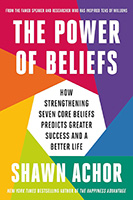 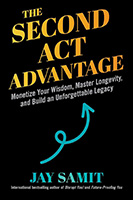 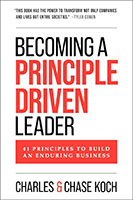 
“Books are the quietest and most constant of friends; they are the most accessible and wisest of counselors, and the most patient of teachers.” — Charles W. Eliot
Follow us on Instagram and X for additional leadership and personal development ideas.
Posted by Michael McKinney at 12:27 AM
|
 |
BUILD YOUR KNOWLEDGE


How to Do Your Start-Up Right STRAIGHT TALK FOR START-UPS 

Grow Your Leadership Skills NEW AND UPCOMING LEADERSHIP BOOKS 
Leadership Minute BITE-SIZE CONCEPTS YOU CAN CHEW ON 
Classic Leadership Books BOOKS TO READ BEFORE YOU LEAD |
|
ABOUT
FOLLOW US:
     

Recent Posts
Categories
Full site feed
MONTHLY ARCHIVE
|
 |
| ||
 | Follow us on:
© 2024 LeadershipNow™  |
| |
 Here is a selection of



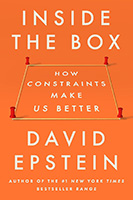 Inside the Box
 Valuable and Visible
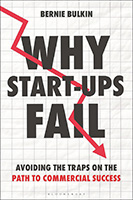 Why Start-Ups Fail
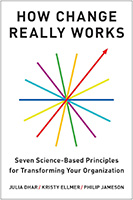 How Change Really Works
 Enlightened Bottom Line
 Incorruptible