  |
|
05.01.26

First Look: Leadership Books for May 2026
HERE'S A LOOK at some of the best leadership books to be released in May 2026 curated just for you. Be sure to check out the other great titles being offered this month.
We live in a world that gives us seemingly infinite choices and prizes freedom above all else. We have an unprecedented number of options regarding what to do, who to be, and how to spend our time. All that choice is wonderful; it is also overwhelming. The irony is that total freedom can be paralyzing, and unlimited resources don’t necessarily lead to the biggest breakthroughs. In fact, overvaluing complete freedom can be disastrous for everything from starting a company to harnessing creativity to finding personal satisfaction. David Epstein argues that all of us—individuals, businesses, institutions, even societies—can benefit from narrowing our options.
You’ve built real skill. You’ve solved real problems. But in a world that rewards visibility, doing meaningful work isn’t enough. Recognition matters. Yet the modern version of “personal branding” feels exhausting. Somewhere along the way, personal branding became synonymous with self-promotion, follower counts, and algorithm-chasing. For thoughtful professionals and students like you, that version feels performative at best and misaligned at worst. And yet invisibility is no longer neutral. If your work is going to matter, your ideas have to travel. In Valuable & Visible: Redefining Personal Branding by Leading with Impact Over Image, award-winning marketing lecturer Vanessa Errecarte offers a different path: a service-first approach designed for professionals who want credibility, not clout.
A shocking 90% of start-ups fail. Many of these failures are preventable, but you need to understand the causes and how to avoid them – both as an entrepreneur and an investor. From technology to the market, from leadership to money, there are numerous reasons why your start-up will fail. Bernie Bulkin guides you through the six major reasons why start-ups fail, and how to avoid them. Instead of accepting failure as inevitable, this book breaks down the main reasons why start-ups fail and how to turn them on their head. Whether you're a founder or an investor, if you're going to put in the time, money, and effort to ensure a company succeeds, you should go in with your eyes open. Bernie's common-sense approach offers the experience of a venture capitalist who has been there and done that. Leadership at all levels makes a difference.
Companies have never invested more in transformation—or wasted more on failed attempts. Finally, a science-based, practical guide to making change stick. Market volatility. AI. Regulatory uncertainty. Geopolitical risk. Leaders know they must adapt faster than ever—yet most transformation programs still fail to deliver their expected outcomes, with enormous costs to companies, shareholders, and the broader economy. But some companies do succeed. In How Change Really Works, Boston Consulting Group experts Dhar, Ellmer, and Jameson show that these successes aren't random—they're connected by a common set of principles and practices. The authors offer seven principles that form the core of a truly human-centered approach to successful organizational change.
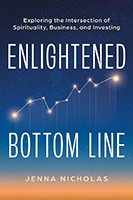
What if business and investing could be rooted in the deepest values of the human spirit? In Enlightened Bottom Line, Nicholas explores the powerful intersection of spirituality, business, and investing—an intersection too often overlooked in a world driven by profit alone. Drawing on moving stories of entrepreneurs, investors, and leaders who are living out this integration, along with cutting-edge research, Nicholas reveals how spiritual wisdom can guide ethical choices in finance and business. Unlike other books on business or investing, Enlightened Bottom Line is not just about strategies, numbers, or policies. It is about reimagining what wealth, success, and leadership can truly mean when guided by purpose, compassion, and integrity. It offers readers concrete frameworks and real-world examples to align their financial decisions with their deepest beliefs.
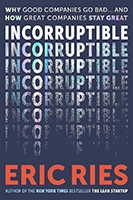
For decades, we've explained corporate corruption as a problem of bad actors, moral weakness, or isolated scandals. But that story doesn't match reality. Again and again, companies founded with strong ideals drift toward short-term thinking, extractive behavior, and mission abandonment—often despite the best intentions of the people inside them. Incorruptible argues that this failure is not primarily ethical. It is structural. As organizations grow, the systems that govern them—ownership, incentives, charters, accountability, and decision-making—quietly reshape behavior. When those systems are poorly designed, even principled leaders are pushed toward outcomes they never wanted. Success itself becomes a form of financial gravity, bending companies away from their original purpose. Ries shows how these failures arise predictably—and how they can be prevented. He reframes corporate governance not as bureaucracy or compliance, but as a creative and strategic act at the heart of building enduring, mission-controlled companies.
  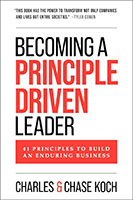 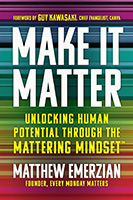
“Books are the quietest and most constant of friends; they are the most accessible and wisest of counselors, and the most patient of teachers.” — Charles W. Eliot
  Follow us on Instagram and X for additional leadership and personal development ideas. Follow us on Instagram and X for additional leadership and personal development ideas.
Posted by Michael McKinney at 12:27 AM
|
 |
BUILD YOUR KNOWLEDGE



How to Do Your Start-Up Right STRAIGHT TALK FOR START-UPS 

Grow Your Leadership Skills NEW AND UPCOMING LEADERSHIP BOOKS 
Leadership Minute BITE-SIZE CONCEPTS YOU CAN CHEW ON 
Classic Leadership Books BOOKS TO READ BEFORE YOU LEAD |
|

ABOUT
FOLLOW US:
     

Recent Posts
Categories
Full site feed
|
 |
| ||
 | Follow us on:
© 2025 LeadershipNow™  |
| |
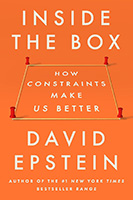 Inside the Box
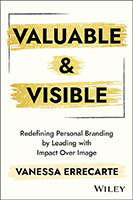 Valuable and Visible
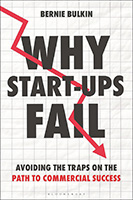 Why Start-Ups Fail
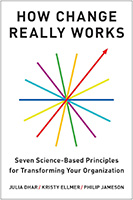 How Change Really Works
 Enlightened Bottom Line
 Incorruptible