  |
|
11.06.26

Why Credibility Matters More Than Your Expertise or Past Wins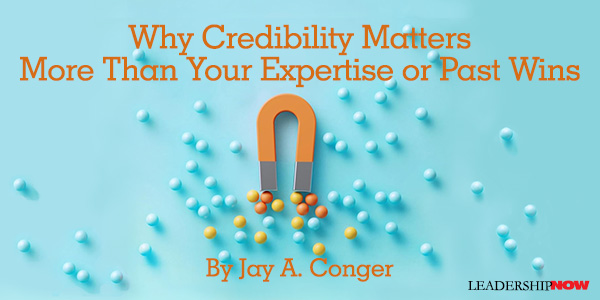
IMAGINE two leaders join your organization in the same month. The first arrives with an impressive résumé: a top-tier MBA, fast-track promotions at a well-known company, and a reputation for ‘executive presence’. The second has a solid but more understated track record. This individual is self-effacing and relational. Six months later, the first is struggling to get colleagues to commit to their ideas. The second has a team that would follow them through a wall. What happened? The first leader thought his reputation would win the day. The second focused on building strong relationships with colleagues. The lesson. People don’t follow resumes. They follow the individuals who proactively earn their trust. Most of us attempt to build credibility with colleagues in one of three ways - all wrong. We try to assert credibility through credentials: an impressive title, a recent promotion, an engineering degree. Sometimes we try to manufacture it through sheer confidence and enthusiasm for an idea. Or we try to build it with logic and slide after slide of data. We assume that the analytics and numbers will demonstrate how credible - and clever - we are. None of these succeed by themselves. More importantly, they are not the foundational element of your credibility. Why expertise isn't enough to earn you credibility Expertise answers only one question about your credibility: "Do you understand the issue you are championing?" While that question matters, it isn't the one your team is really asking. Their question is: "If I commit to you, can I trust you with my effort, my risk, and my career?" Your expertise can't answer that. Neither can your credentials. In fact, past success often works against you. Why? Because it tempts you to rely on reputation rather than actively building relationships. Credibility is far more than your track record or expertise. After all, think about how many times you have not been persuaded by experts. This is the credibility paradox. Your credentials may earn you a seat at the table. But how you persuade - the respect you show for stakeholder concerns, the depth of your preparation, your willingness to truly listen - determines whether your colleagues trust you enough to follow your persuasion. These are the real foundations of your credibility. How do I earn that relational credibility needed to champion my ideas? Hovland and Weiss’s (1951) foundational research on source credibility identified trustworthiness - the perception that you are honest and have the audience’s interests at heart - as the pillar of persuasive credibility. It’s entirely distinct from expertise. This form of credibility is built slowly and proactively - through small things, through consistency, through how you conduct yourself over time, through putting your team’s interests visibly ahead of your own. In contrast, nothing destroys credibility faster than a leader who is using their colleagues as stepping stones to fulfill personal ambitions. This relational foundation of credibility cannot be manufactured on the day you are persuading. This means that the trust underpinning relational credibility is not a communication strategy you employ like a public relations campaign. Instead, it is the accumulated result of how you have conducted yourself over time and how deeply you have invested in genuine relationship-building. Start today by building a bank of relational credibility credits that you can call upon when you are ready to champion ideas. You will still need to bring your expertise and experience into the meeting room. Just don't mistake them for the thing that makes people follow you. Expertise gets you into the room, but trustworthiness determines whether anyone follows you out of it. At what point does my expertise and experience make a difference? With a reputation for trustworthiness in place, your colleagues move to the next assessment - whether you are the best advocate for the issue you are championing. Before committing to your idea, they ask themselves something very specific: Why you, for this? What’s your experience with the issue you are persuading; what’s your stake in it? It’s the difference between a respected colleague making a case, and a respected colleague making a case they have earned the right to make. Colleagues discern the difference immediately. The former invites more critical pushback. If your colleagues trust you as a person and accept you as the right voice for this issue, they turn to the last step in their assessment: Is this a good idea? Is it workable? Are the arguments and evidence supporting it sound? Have all the ramifications and trade-offs been considered? Have the implications for us as stakeholders been thoughtfully assessed and described? Here your credibility is determined by the quality of your preparation, the rigor of your arguments and evidence, and your ability to anticipate and answer the objections of your colleagues. In closing, credibility is the foundation of constructive persuasion. It begins with the trust we build through our relationships. The moment we advocate for an idea, credibility extends beyond who we are to encompass what we know and how convincingly we make our case. Together, these elements inspire confidence in who we are, what we know, and why our ideas deserve to be taken seriously and acted upon.    Follow us on Instagram and X for additional leadership and personal development ideas. 
Posted by Michael McKinney at 09:34 AM
|
 |
BUILD YOUR KNOWLEDGE



How to Do Your Start-Up Right STRAIGHT TALK FOR START-UPS 

Grow Your Leadership Skills NEW AND UPCOMING LEADERSHIP BOOKS 
Leadership Minute BITE-SIZE CONCEPTS YOU CAN CHEW ON 
Classic Leadership Books BOOKS TO READ BEFORE YOU LEAD |
|

ABOUT
FOLLOW US:
     

Recent Posts
Categories
Full site feed
|
 |
| ||
 | Follow us on:
© 2025 LeadershipNow™  |
| |