  |
|
10.05.26

How to Respond When People Throw Wrenches During Change
CHANGE initiatives rarely fail because of flawed strategies or poor execution. They fail because of human behavior: what people do when they feel threatened or at risk of losing status, control, or relevance. A senior leader withholds resources from another team. A project team member hoards information about transition status. Each move undermines the initiative's success. When combined with others, they can derail it. These are the wrenches people throw during high-stakes change. They can be hard to spot and address because they are often covert, uncoordinated, and unpredictable. Without quick and effective responses, dysfunction grows and plans unravel. Left unchecked, the self-interested behaviors become cultural norms, and the downward spiral to failure accelerates. Why People Throw Wrenches During Change Change initiatives typically start well. The leader’s vision of a better future is clear and widely supported. The kick-off builds momentum, and work begins. Before long, people piece together their relative position in the post-change organization. Employees view disruptions through the lens of personal gain or loss. What will this mean for my role, status, influence, or security? As the answers become clearer, emotions flare, which drives actions intended to improve their position. Four forces explain self-interested behavior:
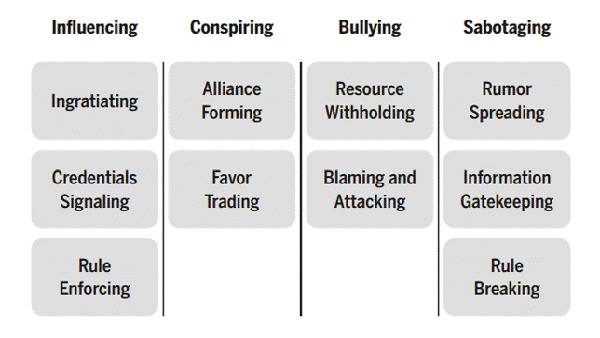
All four forces can be in play at any point in an initiative, so leaders need to anticipate them. Understanding what people perceive they will lose helps you predict likely self-interested behaviors and decide how to best address them. The Wrenches We Throw The most common self-interested behaviors vary in their intensity and the risk they pose to an organization. They fall into four categories, based on strategic intent and level of disruption: Influencing, Conspiring, Bullying, and Sabotaging.
These behaviors also evolve as the initiative progresses, because each phase of change reveals more about what people stand to gain or lose. During the planning phase, there are few details to analyze. Preparation activities such as testing, training, and day-in-the-life exercises begin to clarify future conditions. The full picture emerges after the launch when people live and feel their new roles. The clearer the personal consequences become, the stronger the emotional response, and the greater the likelihood of more aggressive behavior. Responding When Wrenches Appear When a political maneuver or power play catches us off guard, we often become spectators instead of responders. Silence, or a defensive reaction, can strengthen the behavior and increase its damage. A consistent, stepped process, designed to interpret people’s behavior, helps you neutralize self-interested tactics. The Four-Step Response offers a simple approach to recognizing and responding to political maneuvers and power plays: Observe, Assess, Select, and Deliver.
If, for example, a team member repeatedly withholds information, an effective response might be to name the behavior directly: “The testing team needs the data we agreed to share. Without it, testing will be delayed. What is preventing you from providing it?” Their response may reveal a technical obstacle or a fear about losing control. Both guide how to proceed. Following these steps helps you spot self-interested behavior early, identify the emotion behind it, and respond in ways that protect your credibility, relationships, and results. We All Throw Wrenches It’s easy to view people who withhold information, spread rumours, or blame and attack as villains. The reality is that we all throw wrenches when change threatens us. It's normal, and it’s human. Knowing what you personally stand to gain and lose can help you manage your behavior and respond better to others' actions. You can’t control the wrenches thrown or the people who throw them. You can control how you respond. Observe the behavior, assess the emotion driving it, select the best option, and deliver it with purpose to protect the initiative’s progress and results.    Follow us on Instagram and X for additional leadership and personal development ideas. Follow us on Instagram and X for additional leadership and personal development ideas.

Posted by Michael McKinney at 06:11 PM
|
 |
BUILD YOUR KNOWLEDGE



How to Do Your Start-Up Right STRAIGHT TALK FOR START-UPS 

Grow Your Leadership Skills NEW AND UPCOMING LEADERSHIP BOOKS 
Leadership Minute BITE-SIZE CONCEPTS YOU CAN CHEW ON 
Classic Leadership Books BOOKS TO READ BEFORE YOU LEAD |
|

ABOUT
FOLLOW US:
     

Recent Posts
Categories
Full site feed
|
 |
| ||
 | Follow us on:
© 2025 LeadershipNow™  |
| |