  |
|
08.07.26

Be Coachable: Ten Truths of Being Coachable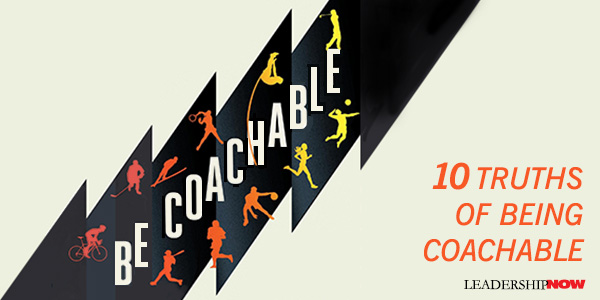
SPORTS analyst Ric Bucher wondered, after rubbing shoulders with some of the greatest athletes, which traits separate the best from the rest? The common denominator was: I was coachable. In Coachable, Bucher explores ten truths of coachability through the stories of all-time great athletes. The truths are applicable to all walks of life. What is coachability? “Synthesizing your vision of who and what you want to be with someone else’s vision of who and what you can be by collaborating to realize that shared vision.” TRUTH 1: Giving In Is Not Giving Up Change is a constant in the short and long term. Sometimes what you set out to do is not what you should be doing. Giving in to a pivot may be just the best thing. It’s not giving up on your dream; it’s growing. “Being coachable is fundamentally about self-improvement. I want to get better, and I’m willing to go backward to go forward.” TRUTH 2: A Fixed Flaw Is a Fountain of Faith Humility to take correction and do something with it. Every problem is there to teach us something—to move us forward. The frustration of having to reconstruct something as fundamental as his shot led Stephen Curry to learn to have faith in the process. He told Bucher, “There’s faith that comes with going through that, working toward that intended outcome of who I want to be. But that whole process, for me, requires having trust in myself to be able to solve whatever challenges are in front of me. But you also have to have the resources around you and the openness to say, ‘Okay, I don’t know everything, I don’t have all the answers, but I’m curious.’” TRUTH 3: No One Knows Your Priorities Better Than You What you do is different from who you are. By prioritizing your personal development along with your ambitions, you create a deeper and lasting identity. The path matters as much as the goal. The relationship between a coach and the protégé is a two-way street. TRUTH 4: Who You Are, Not Where You Are, Will Decide What You Are Moving forward is about making thousands of right decisions that eventually add up to something. It’s all about what is inside and knowing you have room for improvement. Basketball athlete Fred VanVleet said, “Being coachable starts with accountability. If you don’t have an issue with accountability, then you’re not going to have an issue with coaching. If I know I’m wrong before the coach gets to me, then I’m going to receive his message versus being surprised that somebody’s yelling at me. You’re not paying attention to how that message is delivered, you’re thinking more about ‘How do I get it right?’And once you’re on that track, you start to understand what coaching is.” The challenge is not to find the ideal or most attractive building blocks but to fully utilize those readily available. And, as Fred demonstrates, when we exhaust our resources, there is inevitably someone offering new ones out of respect for anyone with a track record of making the most of their opportunities. TRUTH 5: Humble or Humbled, It’s Your Choice To be talented and humble means you have to be held to a higher standard. When you think you’ve arrived, you haven’t. Great talent easily turns to entitlement. SO you need an environment that keeps you humble. Sports psychologist Michel Lardon said, “Most super-elite athletes have been able to maintain a core group that keeps them grounded. Because if you have sycophants everywhere, you go from swagger to arrogance. You develop an ‘I don’t need to learn anything; I don’t need anybody’ attitude. And then you get in trouble.” Bucher adds. “There are two essential parts to a performer realizing their absolute best: they need someone willing to pull it out of them, and they need to have the hunger and courage to have it pulled.” And that takes humility. TRUTH 6: Tunnel Vision Is a Black Hole Great performance requires a larger perspective. See yourself as part of a bigger picture. Experiment and determine what is effective for your growth. Coach Holger believed that “Learning atypical physical acts enhanced an athlete’s brain to execute more traditional ones.” The same is true for any of us. Get outside your head. TRUTH 7: Anyone Can Be the Answer to a Need Being teachable allows you to maximize your circumstances or position. Learning to do the things that coaches and leaders will notice will set you apart. “You need to understand what important people value and how you can help fulfill that value.” John Staton III realized that there are some things more important than the score and often reminded his son, John IV, of that. “There was a skill set to learn—resilience, situational awareness, sportsmanship—that you could take into life to face real-world challenges with that same competitive nature. If you could come out with that competitive edge a little smoother, your chances of success and having an impact on society were probably greater because you would have a more enhanced skill set than someone else.” “Success can’t, and shouldn’t, be measured by how high we climb but whether or not we climbed as high as we were capable of climbing.” TRUTH 8: The Greatest Goals Are the Ones You Can’t Reach by Yourself It can be years before you see the payoff from the behaviors your coaches tell you to do. By doing it, it prepares you to go the distance. It’s a leap of faith. “There are legions of athletes—and doctors, musicians, and executives—who were materially successful but couldn’t build on it because of the way they achieved it.” TRUTH 9: Why Is More Important Than How When the protégé knows why the coach is asking them to do something, even when they don’t get it right, they will follow them anywhere. Anything that pushes us out of our comfort zone has value. But there shouldn’t be any confusion about what a coach is asking a performer to do or how it contributes to the collective goal; if there is, that’s leaving that performer without a North Star for motivation and improvement. No one ever gets to play their desired role in every situation. But the purpose of every role has to be clear to the person filling it; if it’s not, the question “Is there a purpose?” will surface. Followed by the person in that role questioning if they have a purpose. When a relationship with a coach or an organization doesn’t work or isn’t fruitful, it’s inevitably because of one primary reason: the athlete and coach didn’t have a common goal. TRUTH 10: Tough Love Is Still Love Take the message and ignore the delivery. Often, to get where you want to go costs you a lot, but you pay a higher price by not listening. The idea of not listening to an accomplished coach may sound absurd, but elite athletes often consider and sometimes indulge in it. Their physical superiority has allowed them to advance and possibly even excel without following protocol or directions, and some come to believe doing so is actually an essential part of their success. Many have never completely committed themselves to someone else’s vision and, having gotten away with it, are convinced it’s not necessary-until they reach a level where their innate talent isn’t enough. And by then it’s usually too late. Listening sometimes means letting go of what you think you know. Know that you don’t know. “The hidden value of being challenged to let go of what we do best—or we think we do best—is that it creates space to get good at something else. We don’t lose the first talent; we complement it.” In detail, Coachable provides the nuts and bolts for anyone in any field or position looking to realize the best version of themselves. Bucher says begin the coaching conversation with “What is it I’m not doing that would help if I did?”   Follow us on Instagram and X for additional leadership and personal development ideas. Follow us on Instagram and X for additional leadership and personal development ideas.

Posted by Michael McKinney at 09:07 AM
|
 |
BUILD YOUR KNOWLEDGE


How to Do Your Start-Up Right STRAIGHT TALK FOR START-UPS 

Grow Your Leadership Skills NEW AND UPCOMING LEADERSHIP BOOKS 
Leadership Minute BITE-SIZE CONCEPTS YOU CAN CHEW ON 
Classic Leadership Books BOOKS TO READ BEFORE YOU LEAD |
|

ABOUT
FOLLOW US:
     

Recent Posts
Categories
Full site feed
|
 |
| ||
 | Follow us on:
© 2025 LeadershipNow™  |
| |