  |
|
07.10.26

The Way of Excellence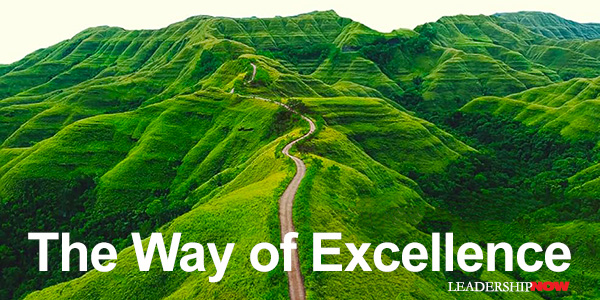
EXCELLENCE is not a destination. It is the way we move in the world. It’s the direction we grow towards. In The Way of Excellence, author Brad Stulberg defines excellence as “An ongoing process of growth and becoming that imbues life with meaning and vigor. It emerges from involved engagement in something worthwhile that supports your values and goals. Excellence combines mastery and mattering. It is not something that is out of reach, but rather it is your birthright, a core part of your nature.” Stulberg also notes that excellence is not perfectionism or obsession. It is becoming a better version of yourself—seeing the future. “When it comes to the pursuit of excellence, we are often faced with the comfort, pleasure, or ease of short-term decisions that contradict our values and long-term goals.” Denying our present to secure a better future. We have to be able to distinguish between what is significant and what is not. To be excellent, you have to care about what you do. “If you want to have a rich and meaningful life, then you have to expose yourself. You have to make yourself vulnerable.” Goals add to the richness of life not for their achievement but because of what you become in the pursuit of the goal. You remember most not getting to the peak but what happened on the climb. Excellence comes from consistency. “Staying consistent often requires demonstrating a bit of restraint today so that you can pick up where you left off tomorrow.” Stulberg tells us to “focus less on any single result and more on the trendline.” Each and every one of us will face setbacks, unforced errors, and moments when our emotions flare and our plans fall apart. What matters most is how we respond—again and again and again. It’s called having a next-play mentality, and it’s a central feature of consistency. Don’t make the activity complex. Keep it simple and don’t major in the minors. “Complexity is a way to avoid facing the reality that what really matters for progress in most endeavors is simply showing up and doing the work.” Eliminate distractions. Top performers don’t always feel motivated. They are disciplined to act. It removes the decision to act. By doing the work, we also gain confidence. Confidence and humility go together. “When we have confidence, it means we’ve done the work to gain it. Doing the work to gain it is hard. And doing hard things makes us humble. It teaches us that we can push limits, but also that we have limits to begin with.” And from that we grow. Discipline bridges the gap between motivation and action, making the former less necessary for the latter. When you have discipline, you don’t need to feel a certain way to show up and get started. You just do. Discipline is not a chest-thumping, performative act of toughness. It is being the kind of person who shows up for what matters and does what you need to do. All of this requires time for rest and renewal. Step away from time to time to recharge. Excellence is about the long game. Patience. “Regardless of our activity, we need to stay in the game long enough to gain at least some wisdom before we can achieve our best.” It also improves your chances for luck, and all great accomplishments contain some luck. Excellence requires gumption—that sense that nothing can stop you. Obstacles can come from without and from inside of you. Rigidity, arrogance, and doubt can stop you in your tracks. When that happens, you may need to step away. “We can stay fresh by spending time outside of our primary pursuits.” Stay curious. “When we adopt curiosity as a default attitude toward challenges, we put ourselves in a better position to meet the moment and grow.” Surround yourself with the right people. Excellence is a journey best taken with like-minded others. “Succeed or fail, the journey is almost always better when you have the right climbing partners. If you travel alone, you risk becoming isolated, re: entful, and burning out. If you travel with others, you’re likely to find joy, meaning, and purpose.” Try not to go it alone.   Follow us on Instagram and X for additional leadership and personal development ideas. Follow us on Instagram and X for additional leadership and personal development ideas.

Posted by Michael McKinney at 08:01 AM
|
 |
BUILD YOUR KNOWLEDGE


How to Do Your Start-Up Right STRAIGHT TALK FOR START-UPS 

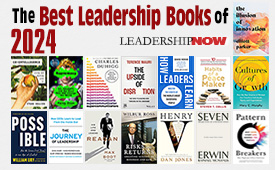
Grow Your Leadership Skills NEW AND UPCOMING LEADERSHIP BOOKS 
Leadership Minute BITE-SIZE CONCEPTS YOU CAN CHEW ON 
Classic Leadership Books BOOKS TO READ BEFORE YOU LEAD |
|

ABOUT
FOLLOW US:
     

Recent Posts
Categories
Full site feed
|
 |
| ||
 | Follow us on:
© 2025 LeadershipNow™  |
| |