  |
|
07.17.26

Same as Ever: What Never Changes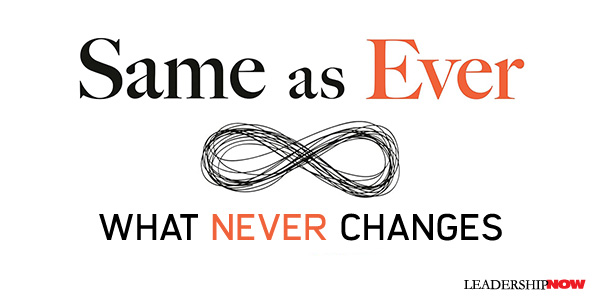
SOME things never change. When it comes to human behavior, some things stay the same. And those behaviors can make the future more knowable even as so much is changing all around us. Throughout history, circumstances change, but human nature does not. You may not know specifics of the change, but you can know how people will respond. And that can help to explain how we got where we are. In Same as Ever, Morgan Housel presents us with 23 things that never change. He asks, “What would be true in every imaginable version of your life, not just this one? Those universal truths are obviously the most important things to focus on, because they don’t rely on chance, luck, or accident.” Every current event-big or small-has parents, grandparents, great-grandparents, siblings, and cousins. Ignoring that family tree can muddy your understanding of events, giving a false impression of why things happened, how long they might last, and under what circumstances they might occur again. Viewing events in isolation, without an appreciation of their long roots, helps explain everything from why forecasting is hard to why politics is nasty. Let’s look at six of the twenty-three timeless truths Housel presents. Risk is What You Don’t See Risk is what you are not prepared for. “As financial advisor Carl Richards says, ‘Risk is what’s left over after you think you’ve thought of everything.’” It’s what you don’t see coming. If you knew what was coming, you would be prepared for it. Forecasts are based on what you think you know—based on what has happened. What makes it risky is that you can’t imagine it coming. If you did, you would prepare for it. I can promise you that will be the case going forward. The biggest risk and the most important news story of the next ten years will be something nobody is talking about today. No matter what year you’re reading this book, that truth will remain. I can say that confidently because it’s always been true. The fact that you can’t see it coming is exactly what makes it risky. We easily underestimate what we don’t know. Wild Minds When it comes to what makes the extraordinary person extraordinary, you have to take the good with the bad. “Something that’s built into the human condition is that people who think about the world in unique ways you like almost certainly also think about the world in unique ways you won’t like.” When you think I want to be like them, you only see the extraordinarily successful part of them. What you don’t see is the messy part that makes them be who they are. People who are abnormally good at one thing tend to be abnormally bad at something else. Part of this idea is realizing that people who are capable of achieving incredible things often take risks that can backfire just as powerfully. The same personality traits that push people to the top also increase the odds of pushing them over the edge. Does Not Compute The world does not work in rational ways. That’s because humans are not rational. And there is no way to quantify that. “Historian Stephen Ambrose notes that Eisenhower and General Omar Bradley got all the war-planning reasoning and logic right in late 1944, except for one detail-the extent to which Hitler had lost his mind.” Outcomes are not always rational. Part of that is because not everyone thinks the way we do or agrees on how things should be done. Properly incentivized, people will do irrational things. Behavior that makes sense to them, but from a wider perspective makes no sense at all. We believe our own, often irrational stories. At the same time, Housel observes, “We’d never get anywhere if everyone viewed the world as a clean set of rational rules to follow.” When the Magic Happens People change, and innovations happen when it is too uncomfortable not to make a change—when their future depends on it. “Stress focuses your attention in ways that good times can’t.” Sometimes people wait too long to change, and then the stress of the moment becomes debilitating, and they go into survival mode. The fear, the pain, the struggle are motivators that positive feelings can never match. A carefree and stress-free life sounds wonderful only until you recognize the motivation and progress it prevents. No one cheers for hardship—nor should they—but we should recognize that it’s the most potent fuel of problem-solving, serving as both the root of what we enjoy today and the seed of opportunity for what we’ll enjoy tomorrow. Overnight Tragedies and Long-Term Miracles When improvement happens slowly, almost nobody notices. “The most important things come from compounding. But compounding takes a while, so it’s easy to ignore.” The same is true for personal growth. And when we don’t see instant progress, we often quit. But if we stay with it, we are rewarded. On the other hand, bad news comes at us in an instant, and we can’t help but give it our attention. Growth always fights against competition that slows its rise. New ideas fight for attention. Some might try to step in and slow the fall, but everyone gets out of the way of decline. Incentives: The Most Powerful Force in the World Crazy incentives cause people to behave in crazy ways. Truth is often just what you want to believe. “No matter how much information and context you have, nothing is more persuasive than what you desperately want or need to be true. And what makes incentives powerful is not just how they influence other people’s decisions but how blind we can be to how they impact our own.” One of the strongest pulls of incentives is the desire for people to hear only what they want to hear and see only what they want to see. When good and honest people can be incentivized into crazy behavior, it’s easy to underestimate the odds of the world going off the rails. Housel ends this truth with a question we should all be asking: “Which of my current views would change if my incentives were different?” He then warns, “If you answer ‘none,’ you are likely not only persuaded but blinded by your incentives.” There are 17 other truths presented in Same as Ever that are well worth your time to reflect on.   Follow us on Instagram and X for additional leadership and personal development ideas. Follow us on Instagram and X for additional leadership and personal development ideas.

Posted by Michael McKinney at 07:01 AM
|
 |
BUILD YOUR KNOWLEDGE



How to Do Your Start-Up Right STRAIGHT TALK FOR START-UPS 

Grow Your Leadership Skills NEW AND UPCOMING LEADERSHIP BOOKS 
Leadership Minute BITE-SIZE CONCEPTS YOU CAN CHEW ON 
Classic Leadership Books BOOKS TO READ BEFORE YOU LEAD |
|

ABOUT
FOLLOW US:
     

Recent Posts
Categories
Full site feed
|
 |
| ||
 | Follow us on:
© 2025 LeadershipNow™  |
| |