  |
|
07.22.10

No Excuses!“I don't know anyone who could get through the day without two or three juicy rationalizations.”We like (need) to rationalize. We often feel compelled to create acceptable reasons for otherwise unacceptable behavior. You know … excuses. We all have made excuses and can easily get into the habit of making excuses. 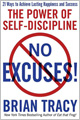 Brian Tracy, a man who needs no introduction, says the way out of the morass created by excuses is self-discipline. Elbert Hubbard defines self-discipline as the ability to do what you should do, when you should do it, whether you feel like it or not. No Excuses! is a primer on self-discipline and full of those kinds of things that will make you reconsider the habits you have gotten into. Tracy cites Kop Kopmeyer: “There are 999 other success principles that I have found in my reading and experience, but without self-discipline, none of them work. With self-discipline they all work.” Tracy examines how the practice of self-discipline impacts twenty-one areas of your personal, business, sales and financial life such as character development, goal setting, leadership, health and family. The pull to take the path of least resistance and to do what is expedient, says Tracy is our worst enemy. Looking only to the short-term “most people do what is expedient, what is fun and easy rather than what is necessary for success.” In a personal example, Tracy recalls at age 21 that it dawned on him that “this is my life. This was not a rehearsal for something else. The game was on, and I was the main character, as in a play.” That realization changed his life and he resolved to take more responsibility for his life and take a “no excuses” approach to every aspect of his life. “In its simplest form,” says Tracy, “the role of the leader is to take responsibility for results.” This involves developing a vision for yourself and for your areas of responsibility. [As an aside to the vision thing, on Twitter today, Tom Peters said that maybe it’s just semantics but, “Don’t especially like vision. Prefer portrait. E.g.: ‘Leaders paint portraits of Excellence.’” Phil Gerbyshak filled in some of the details of Tom’s thought by stating that he thinks “leaders provide the outline for excellence and allow others to fill in the colors and add details/meaning.” Good food for thought. Does portrait put a face on it—responsibility?] Continuing on, Tracy says that leaders must take the responsibility to be role models and set the example. “There is a direct relationship between your ability to discipline yourself and your behaviors and your readiness to lead.” The bottom-line of self-discipline is peace of mind. Peace of mind because you consistently do what needs to be done and have developed the self-discipline needed to let go of the negative events that happen to you—forgive and forget—and focus your energy instead on taking responsibility and moving forward. “Discipline yourself to stop justifying your negative emotions by continually rehashing what happened and what the other person did or didn’t do.” Tracy adds, “Your ability to achieve your own peace of mind is the true measure of your success and the key determinant of your happiness.” There are a thousand excuses for failure but never a good reason. Of Related Interest:  Never Complain. Never Explain.
Crunch Point: Test Your Excuses Never Complain. Never Explain.
Crunch Point: Test Your Excuses
Posted by Michael McKinney at 01:46 PM
|
 |
BUILD YOUR KNOWLEDGE


How to Do Your Start-Up Right STRAIGHT TALK FOR START-UPS 

Grow Your Leadership Skills NEW AND UPCOMING LEADERSHIP BOOKS 
Leadership Minute BITE-SIZE CONCEPTS YOU CAN CHEW ON 
Classic Leadership Books BOOKS TO READ BEFORE YOU LEAD |
|
ABOUT
FOLLOW US:
     

Recent Posts
Categories
Full site feed
|
 |
| ||
 | Follow us on:
© 2025 LeadershipNow™  |
| |
