  |
|
05.05.08

Learning Leadership the Hard Way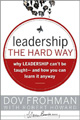 “It is precisely these forces of increased turbulence that have fueled the growing preoccupation with leadership. In such an environment, leadership isn’t a luxury. It’s a matter of survival! Yet the very forces that make leadership more critical also make teaching it virtually impossible. What it takes to lead an organization through that turbulence isn’t simple or straightforward. There is just too much uncertainty. And it takes personal courage. You don’t really know what you will do at the moment of truth. No matter how much training you have (or how many leadership books you have read), nothing quite prepares you for that moment when you enter the eye of the storm!”He believes this means embracing turbulence and crisis, not avoiding it. It means “flying through the thunderstorm.” While there are basic principles to leadership, Frohman says “there are no simple recipes. Until you have lived it, you don’t really know how to do it.” If you are going to learn to lead, you must develop a “particular frame of mind, a distinctive way of perceiving and acting. You must free yourself from habitual ways of looking at things, cultivate an independent and questioning perspective, and be ready to embrace alternative and counterintuitive points of view.” Frohman offers four resources that aspiring leaders can use to learn how to lead: 1. Stay True to Your Passion. No leader can be effective who does not identify 100 percent with the organization’s mission. Because this identification between leader and organization is so important, it’s critical for you as an aspiring leader to identify your passion – what really drives you – and to stay true to that passion through the course of your career. If you do, you will find that this passion is a powerful resource for guiding you through the challenges of leadership the hard way. 2. Get An Invisible Mentor. No aspiring leader has to wait to be assigned a mentor. Choose and invisible mentor, someone whose behavior you study from afar. Choose someone whose leadership style you relate to and admire. Study that person closely. 3. Become a Reflective Practitioner. A term coined by organizational theorist Donald Schön in his 1983 book, a reflective practitioner is one who systematically reflects on one’s own experiences. It’s the kind of learning that happens in the moment. Build systematic reflection into your everyday activity. 4. Learn From Your People. A close relationship with your people can give you a tremendous resource for bootstrapping your leadership capabilities. There are a variety of ways to develop that close bond – be present in the organization, don’t be afraid to expose one’s own mistakes to the organization, welcome dissent, and use your own behavior strategically. Aspiring leaders should get in the habit of thinking of their actions as a form of communication.
Posted by Michael McKinney at 04:01 PM
|
 |
BUILD YOUR KNOWLEDGE



How to Do Your Start-Up Right STRAIGHT TALK FOR START-UPS 

Grow Your Leadership Skills NEW AND UPCOMING LEADERSHIP BOOKS 
Leadership Minute BITE-SIZE CONCEPTS YOU CAN CHEW ON 
Classic Leadership Books BOOKS TO READ BEFORE YOU LEAD |
|

ABOUT
FOLLOW US:
     

Recent Posts
Categories
Full site feed
|
 |
| ||
 | Follow us on:
© 2025 LeadershipNow™  |
| |
