  |
|
02.27.26

4 Timeless Principles to Differentiate You From AI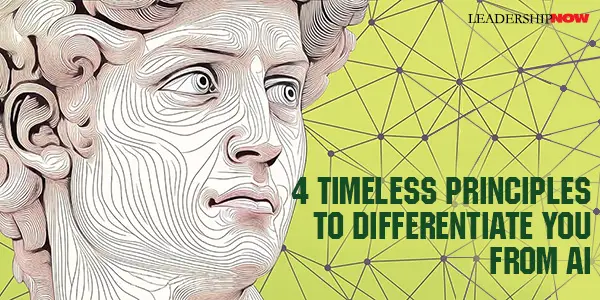
IN The Next RenAIssance: AI and the Expansion of Human Potential, AI expert Zack Kass believes “properly harnessed, AI could democratize education, revolutionize healthcare, and accelerate innovation,” but “for Al to truly serve humanity, we will be forced to solve radical new ethical dilemmas, unprecedented economic disruptions, daunting technical challenges, environmental collapse, dehumanization, the loss of identity, and above all, terrifying uncertainty.” Yet because AI is not a tangible tech – something we can see – we are naturally suspicious. How does it work? Kass writes that AI systems must begin to “show their work” rather than just spitting out an answer if they are to be trusted. How did you get to the conclusion it came to? What information was considered? How valid is it? We need real-time transparency. “Real-time transparency gives users a window into what the system is prioritizing and why, helping build informed trust instead of blind faith.” What about the future of work? “Predicting Al’s impact on jobs has become high-stakes roulette, and the bets often say more about the gambler’s worldview than technology itself. Even among industry and economic experts, the topic is very much still up for debate.” Kass offers a set of four principles meant to guide how we live, work, and lead in the age of artificial intelligence. 1. Go Outside: The physical world matters more than anything else. It is life in four dimensions. Serendipity happens naturally. The physical world carries variety that no recommender system can deliver. Algorithms collapse toward similarity. Streets, markets, trails, and small talk offer variance and surprise. Serendipity does not follow a schedule. It happens when you are a little off route, a little curious, and fully present. It shakes loose stale assumptions. It builds resilience. You learn to adapt. Adaptability will keep you relevant. Anchors will keep you principled. If you confuse methods for values, you will collapse with them. But if you adapt while anchoring in your values, you will find the formula for resilience in any era. Go outside and be in the world you are trying to serve. Be in it. 2. Learn How to Learn: Study what you want. The process alone will teach you how to learn something else. Learning trumps what you already know. You will not be defined by what you know, or even by what you have already mastered. You will be defined by your ability to master something new, and your drive to keep doing so again and again. Knowledge expires. Tools expire. But learning endures. 3. Optimize for Human Qualities: Be Human. AI will make human qualities more valuable. Courage, compassion, hope, curiosity, humor, wisdom, and empathy are measures of human achievement. And soon these “soft skills” may in fact become our primary means of differentiation. In the age of AI, your humanity is the product. Your bedside manner matters. 4. Lead with Optimism: Lead with optimism. Fear constrains. Choose a can-do approach. Progress does not happen by default. People build toward the stories they believe. Narrative sets policy. Belief sets budgets. A leader’s horizon becomes a team’s boundary conditions. If we tell stories of decline, we will write rules that constrain. If we tell credible stories of a better future, we will invest, upskill, and move. Optimism is the way forward.   Follow us on Instagram and X for additional leadership and personal development ideas. Follow us on Instagram and X for additional leadership and personal development ideas.

Posted by Michael McKinney at 11:16 AM
|
 |
BUILD YOUR KNOWLEDGE



How to Do Your Start-Up Right STRAIGHT TALK FOR START-UPS 

Grow Your Leadership Skills NEW AND UPCOMING LEADERSHIP BOOKS 
Leadership Minute BITE-SIZE CONCEPTS YOU CAN CHEW ON 
Classic Leadership Books BOOKS TO READ BEFORE YOU LEAD |
|

ABOUT
FOLLOW US:
     

Recent Posts
Categories
Full site feed
|
 |
| ||
 | Follow us on:
© 2025 LeadershipNow™  |
| |